

Nearly 2,000 health staff assaulted in Laois, Midlands and Dublin despite €10 m security spend


Midlands TD says nothing justifies assaulting HSE staff
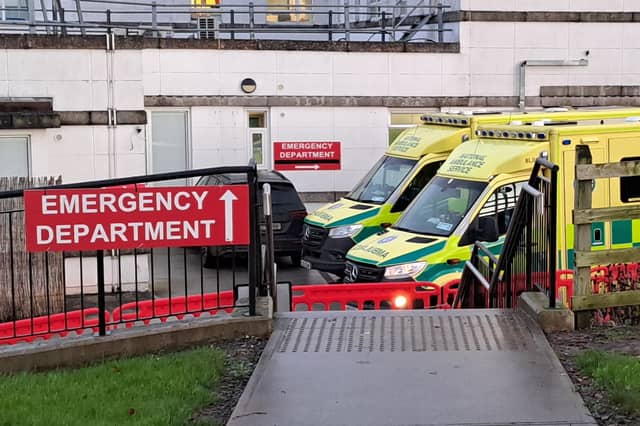
The HSE must take action to tackle an “epidemic” of aggression against people working in hospitals and other parts of the HSE, according to a Midlands TD who has obtained figures which show that thousands of staff were assaulted over the past two years in Dublin and the Midlands, despite millions being spent on security.
HSE responses issued to and published by Independent TD Carol Nolan show that reveal that 1,938 staff assaults were recorded in the HSE Dublin and Midlands region in the past two years. In 2024, 1,004 were assaulted, while in 2025, there were 934 assaults.
Nationally, there were 10,363 recorded incidents of assaults on patients in HSE statutory services from 2022 to 2025.
Deputy Nolan commented on the staff assault figures.
“Even if we take the HSE’s qualifying remarks around these incidents involving low levels of harm into account, these are deeply disturbing numbers that call for an immediate high-level response. There would seem to be an epidemic of aggression within our health system directed at staff, which is completely unacceptable,” she said.
Dep Nolan said frustration at long delays in accessing care as a cause needs to be examined, but there is no excuse for attacking staff.
“Nothing justifies an assault of any description on staff members or medical personnel, but we need to understand what is driving these truly appalling numbers and we need an appropriate and calibrated response,” she said.
Figures provided to the Offaly TD show that the HSE spent €50.79 million on security in 2025. Of this, €9.96 million was spent on security in the Dublin Midlands Regional Health area, which includes the Midlands Regional Hospital Portlaoise. Dep Nolan said the measures taken resulting from the spending are not working.
“We can see that because the number of assaults has effectively remained static since 2022. That is an indictment of the HSE, but it also points to an epidemic of low-level aggression within our healthcare system that is simply intolerable for patients, their families and staff,” she said.
The former Laois Offaly TD called for an immediate high-level response from the Minister for Health and HSE leadership. She said this must include an urgent independent examination of the root causes of this violence and aggression, with specific attention to the role of chronic system pressures such as A&E overcrowding, long waiting times and access delays.
She also wants enhanced support for affected staff and patients, and clear accountability for improving safety across all HSE facilities. MORE BELOW PICTURE.

“Ensuring the safety of frontline healthcare workers and vulnerable patients must be an absolute priority. These figures cannot be allowed to become the new normal,” Deputy Nolan concluded.
The HSE told Dep Nolan that it does not accept or tolerate any form of abuse in the workplace and has set out in clear terms the standards of conduct and behaviour which every employee is expected to uphold. It said its Dignity at Work policy for the Public Health Service sets out how the HSE aims to create and support an environment where staff are treated with dignity and respect.
It said that assault data does not include near-miss incidents, adding that the majority of incidents had no harm or low-level harm reported.
“Ensuring the safety of all employees and service users is a priority for the HSE. We are committed to creating a safe environment within which to work or to be treated. The HSE actively supports the workforce through a range of policies, continuing to prioritise the management of work-related aggression and violence to support the organisation’s strategy and policy,” said the HSE.
On money spent on security it said the figures provided include costs related to security and security services such as alarm monitoring, cash collections, call outs re access control, cameras, intercoms etc, security improvements/maintenance, on occasion patient specialing where the specific complexities of a patient requires additional security to be in place while in hospital. It said some hospitals have their own directly employed security staff.