

Despite all the rainwater supply to big Laois towns is incredibly still at risk of drought


The supply of water to the biggest towns in Laois and a number of other villages remains at risk of drought according to Irish Water.
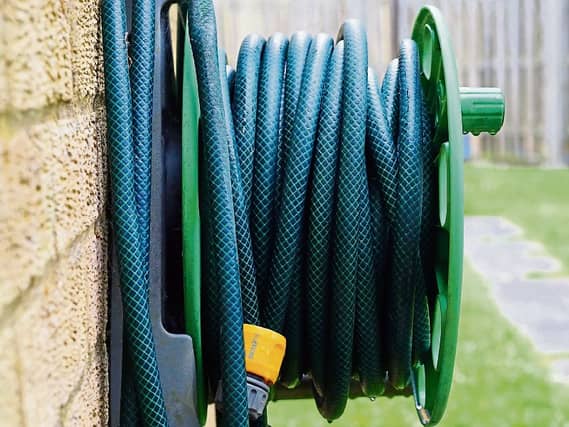
But following recent heavy rainfall and improving river and groundwater conditions, Irish Water is reviewing the need for the National Water Conservation Order, more commonly known as the hosepipe ban.
The ban was put in place on 9 June and was expected to remain in place until 21 July. Irish Water says it was issued in a bid to safeguard water supplies for essential purposes, in particular water needed for sanitation purposes during the COVID-19 crisis.
Above-average rainfall in many areas of the country has resulted in the recovery of some of the water supplies that were in drought or at risk of drought. But 22 schemes remain in drought and a further 63 are at risk. While the overall numbers are trending downwards, the situation is not uniform across the country.
Irish water said six water schemes in Laois were affected when the Water Conservation Order was first put in place and this number has not changed. These are: the Portarlington, Rosenallis, Ballyroan, the Swan, Mountmellick and Portlaoise schemes.
John Gavin, Irish Water, commented on the situation.
“While some areas of the country have had significant rainfall it has not been equally distributed nationally. It is encouraging to see the improvement in some water sources, but water levels in groundwater including some in Co. Laois remain low for this time of year.
“The Water Services Act requires Irish Water to form the opinion that there is an urgent need for the Water Conservation Order and it can only be applied where and when it is necessary. Irish Water needs to form the opinion that ‘a serious deficiency of water available for distribution exists or is likely to exist.’ We are now in a position where we need to judge whether the deficiency of water continues to satisfy the criteria set out in the Water Services Act and if this criteria can be applied nationally or whether we can remove the Water Conservation Order for certain parts of the country.
“It is still essential that members of the public in Laois continue to conserve water and any non-essential use of water should be discouraged, whether we are in a drought or not.
“We would like to thank the people of Laois for their efforts in conserving water in their homes and gardens over the past number of weeks and our large water users who have worked proactively with us to use water more efficiently in their businesses,” he said.
Irish Water is continuing to monitor these water sources as their recovery is fragile and subject to change. Early next week Irish Water will again meet with Met Eireann, the OPW, the EPA and other key stakeholders to discuss the impact of the recent rainfall with consideration to lifting or partially lifting the Water Conservation Order.
Irish Met Eireann confirmed that May 2020 was the driest since 1850 and continued dry weather was forecast. When the Water Conservation Order was issued 27 of Irish Water’s 900 drinking water schemes, were in drought with another 50 at risk of going into a drought. Thereafter the situation deteriorated rapidly with the number of schemes in drought or at risk of drought peaking at 98.