

Major boost to visitor numbers at iconic Laois landmark

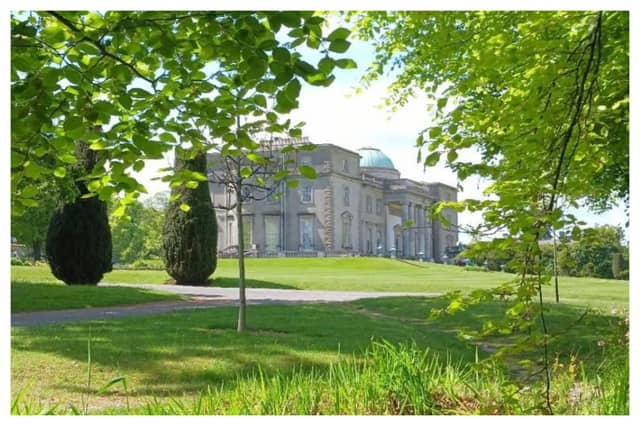

Emo Court saw a spike in visitors last year
Emo Court saw a massive increase in visitors last year, according to the latest figures released by the Office of Public Works.
The OPW announced that a total of 13.4 million people visited heritage sites across the country in 2025 in what was a strong year for Ireland’s heritage landmarks.
The 2025 figures also highlighted regional growth across the country, with Emo Court in Laois one of the stand out sites across the country for its impressive increase in visitors.
In 2024, Emo Court’s Parklands and House saw an impressive 151,027 people visit the site. However, this number more than doubled to 305,539 last year.
READ NEXT: Voting opens to help stunning Laois convent housing project win Ireland's Favourite Building title
Emo Court House near Portarlington reopened last May after the completion of a multi-million euro project to refurbish the mansion. The grounds of Emo Court were also upgraded, with a new carpark and picnic area.
Emo Court was designed by James Gandon in 1790 for the first Earl of Portarlington, John Dawson. He was the architect behind Dublin's Four Courts and Customs House as well as the modest Church of Ireland chapel in Emo village.
It took over 80 years to complete the neoclassical mansion. After being sold to the Irish Land Commission in 1920 and then acquired by the Jesuit Brothers in 1930, it was eventually sold to Major Chomeley Harrison in 1969 who then gifted it to the Irish State in 1994.
Visitor figures were also listed by the OPW for the Rock of Dunamase. This Laois landmark did see a dip in figures last year to 43,824 in comparison to 47,123 in 2024. This decline may in part be due to the ongoing works to install a visitor carpark at the Rock of Dunamase.
Commenting on the impressive figures, Minister of State with responsibility for the OPW, Kevin 'Boxer' Moran, said: "The 2025 visitor data is a testament to the enduring appeal of our national heritage. From historic houses to ancient monuments- the continued investment by the State in our rich and unique heritage portfolio is essential for the safeguarding and preservation of our built heritage.”
“These sites are not just monuments; they are the heartbeat of regional tourism and vital to our local economies. It is encouraging to see so many people, both from home and abroad, connecting with the stories that shaped Ireland."
Funded by the Local Democracy Reporting Scheme