

Massive four tonnes of hazardous household waste collected in one day in Laois
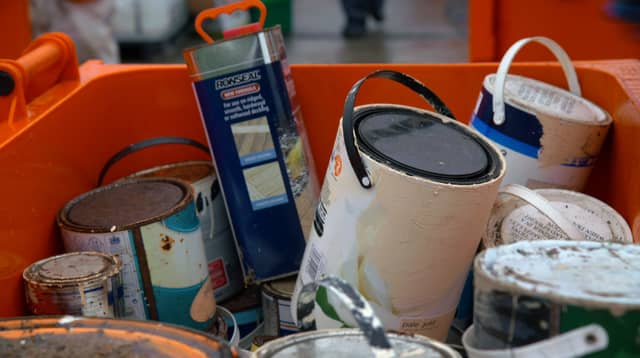

There are calls for waste reduction across Ireland as 170 tonnes of hazardous household waste was removed from Irish homes in just 11 days.
Four tonnes of this waste was collected in Rathdowney, Co Laois during the free Household Hazardous Waste Collection Day on May 12, 2018.
The majority of hazardous waste collected was unused paint, unused oil containers, waste oil, detergent, aerosols and pesticides.
The cost of processing 170 tonnes of hazardous waste is almost €200,000.
These figures have reinforced the key aims set out by the European Week for Waste Reduction (EWWR), taking place from November 18 to 25 2018.
A total of 170 tonnes of waste considered harmful was collected at various designated points throughout Ireland in just 11 days, as part of an ongoing initiative to raise awareness of how to properly dispose of Hazardous Household Waste.
The free Household Hazardous Waste Collection Days were organised for 11 collection points in 10 counties by Ireland’s three regional waste management offices (Eastern/Midlands, Southern, Connacht/Ulster) and their respective local authorities.
The collection scheme was part of the national collection programme established in 2015 and funded by the Department of Communications, Climate Action and Environment (DCCAE).
Leftover or unused paint was by far the largest waste offender according to the figures, with more than 130 tonnes of this waste product disposed of during the free collection days in Mayo, Kerry, Waterford, Laois, Westmeath, Cavan, Kildare, Tipperary, Offaly and Sligo.
As well as 130 tonnes of paint, the household hazardous waste collected during the 11 days included more than 12 tonnes of oil containers, over 8 tonnes of waste oil, almost 5 tonnes of adhesives and 2.25 tonnes of detergent.
Householders removed more than 2 tonnes of leftover and unused medicines from their homes and disposed of them at the hazardous waste Collection points.
More than 2 tonnes of pesticides, close to 2 tonnes of oil filters and more than 1.7 tonnes of aerosols also made up the 170 tonnes of hazardous waste safely disposed of.
The remainder of the waste included cooking oil, mixed fuels, herbicides, batteries, antifreeze, and solid oily waste.
Hugh Coughlan is the Co-ordinator, Eastern-Midlands Region Waste Management Office.
“The theme of EWWR 2018 is Hazardous Waste Reduction and is a timely reminder of the need to reduce our waste where and when possible.
“The Free Household Hazardous Waste Collection Days showed an understanding and willingness by householders to dispose of waste properly, and they are to be commended for their actions.
“However, the large quantities of waste disposed of during these free events suggests that Irish households continue to over purchase certain products. This is particularly true for paint. We must, therefore, go beyond thinking solely of safe disposal and seriously work towards reducing our waste.
“The EWWR aims to raise awareness about waste reduction, product reuse and material recycling strategies, as well as working together to “Clean up Europe” by encouraging groups, organisations - private, civic and public - and individuals to get involved in similar projects to raise awareness and reduce waste.
“An important objective for the three regional waste offices is to continue to raise awareness among householders and help them identify which substances are hazardous as well as how to dispose of them and most importantly, reduce their use in the home,” he said.
Dr Joanne Rourke is the Resource Efficiency Officer Eastern-Midlands Regional Waste Management Office.
“Collecting, processing and safely disposing of household waste is a complicated process, and therefore can be expensive. The cost of processing 170 tonnes of hazardous waste, for example, amounts to almost €200,000,” said Dr Rourke.
The environmental expert explained that once collected, hazardous waste is sent to specialist processing centres in Belgium, Germany, UK and Ireland through a specialised transport system that is regulated and traced by the National Transfrontier Shipping Office (TFS Office).
“Household Hazardous Waste cannot be disposed of in our general household waste bins. Carelessly disposed household hazardous waste can have a negative impact on the physical health of waste disposal workers and on our wastewater systems if poured down sinks, toilets or drains.
“Many Civic Amenity Sites accept household hazardous waste all year round and during 2018, some local authorities ran and funded their own free collections in addition to the ones carried out under the DCCAE funded programme.
“A nominal fee is usually charged at Civic Amenity Sites for the disposal of household hazardous waste to help cover costs. Households can contact their local authority to find out about the available hazardous waste collection services in their areas,” she added.
As well as encouraging the correct disposal of hazardous household material, the free Household Hazardous Waste Collection events also provided ideas on how to reduce the number of hazardous products purchased and used for everyday purposes such as cleaning, gardening and DIY.
“We would encourage people to choose alternative non-hazardous products, whenever possible. We have some great tips and ideas for gardening, cleaning and DIY chores using household non-hazardous products on www.southernwasteregion.ie,” said Dr Rourke.