

VW 'lugger' is a long-distance runner
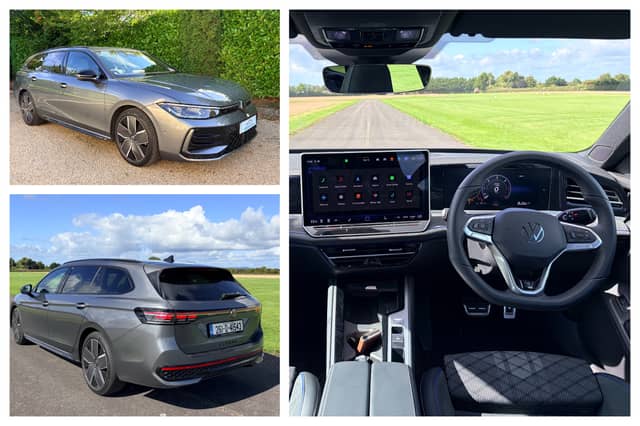

Road Test: Hugh Maguire assesses the VW Passat Diesel Estate in diesel and PHEV
While all the talk is of EVs and, indeed hybrid or plug-in-hybrid there is still a market for diesel.
After all, most commercial vehicles are diesel-powered, and for some, the huge range offered by diesel power is a necessity. However, we can’t ignore the fact that legalisation is moving slowly but surely to quell the volume of diesel vehicles sold, and it is working.
The sale of diesel-powered new cars is now just 12.56% of the Irish new car market to the end of August this year, according to the SIMI.
Petrol (non-plug-in hybrid) sales are strong at 24.14%, and EVs lead by a small margin at 26.3% of the market. Interestingly, plug-in-hybrid sales have fallen to just 14.85% of the market. So are VW crazy to offer both a diesel and a PHEV in the VW Passat model? After all it is as these figures demonstrate, diesel and PHEV is a shrinking market.
I have been road testing the new ninth generation VW Passat in R-Line specification. The Passat is now only available as an estate car, but with a choice of diesel power or PHEV. Which should you buy if you are looking for a roomy estate car?
So how does it look?
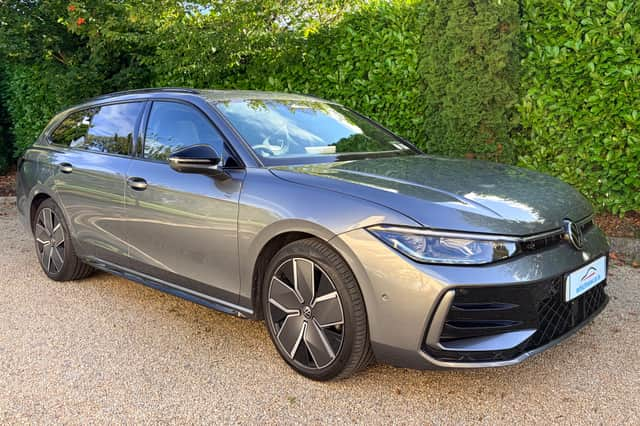
Travel around Europe, and you will see estate cars everywhere, but here at home we don’t seem to have the same love for them. The SUV dominates sales here. From a styling point of view, this Passat actually looks reasonably well if somewhat conservative.
The R-Line specification adds some nice detailing at the front, such as the gloss black lower fascia. There are two-tone 19-inch alloys that add a touch of style, and the design of the rear of the car looks quite well.
What is it like inside?
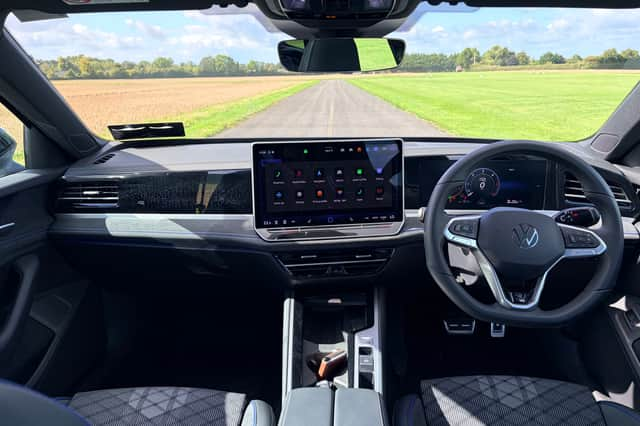
My immediate impression on opening the door is of a very well-appointed cabin with a premium feel. Everything looks to be made of high-quality materials, and in this trim level the interior boasts judicious use of Alcantara trim. The one-piece sports seats look excellent and prove to be very comfortable over long journeys.
Both front seats are heated, with multiple fully electric adjustments including lumbar as well as three memory settings. The multi-function steering wheel features proper buttons (as opposed to annoying haptic type).
The driver's display is digital and can be configured in a number of ways to suit your preference. There is also an excellent, clear head-up display with useful driver information.
All in all, this feels like a very plush, well-appointed cabin. However, dominating this lovely interior is an absolutely gargantuan central touch screen which measures a whopping 15 inches.
Why? It is way too big and too distracting, as well as taking away from an otherwise lovely cabin. Furthermore, there are no real buttons, as this car was produced before VW put their hands up and said it was a mistake to ditch buttons in favour of touchscreens. As a result, this Passat has the fiddly and annoying-to-use haptic slide controls for the ventilation and volume positioned under the huge screen. MORE BELOW PHOTO.
From an equipment level though, it is really wanting for nothing. A tilt/slide glass panoramic roof lets in plenty of light and has an electric sun blind, while the car also boasts three-zone climate control, ambient lighting, an electric tailgate and wireless smartphone charging and connectivity, to name but a few.
Unlike some rivals, the software in the car's touchscreen does not operate via Google, which some may see as a disadvantage.
The cabin is vast, with generous amounts of legroom and headroom both front and rear. As a load lugger, the Passat is top class, offering some 690 litres with the rear seats in place and a whopping 1920 litres with the rear seats folded forward. There is also a handy “ski hatch” allowing long items to be loaded while keeping both rear passenger seats in place.
What is under the bonnet?
Power comes from VW’s tried and tested 2.0 litre turbo diesel, which is mated to a standard 7-speed DSG transmission driving the front wheels. Max bhp is close to 150 bhp, which is moderate really, but it is the economy figure that really impressed me.
The diesel Passat will, of course, suit the long-distance traveller best, but when it comes to trading it in a few years, residuals may suffer a bit.
I returned an overall test average of just 5.6 litres per 100km, giving this diesel Passat a comfortable range in excess of 1,250km. That is mighty impressive and makes this car a perfect long-distance cruiser. You won’t be visiting the fuel pump very often.
To put that in perspective, you could drive from Dublin to Cork and back more than twice without refuelling! Road tax is €270 per year.
Overall performance is reasonable, but it's no ball of fire. Suffice to say it is adequate rather than sporty.
What is it like to drive?
Forget any sporty ideas the R-Line badging may have generated. This Passat is not a sporty drive at all. However, it acquits itself very well indeed as an accomplished long-distance cruiser, and it rides and handles quite well. I did notice a bit more tyre roar than I expected over more coarse tarmac, and at times you can hear a mild thump as the car transitions ridges or cat's eyes on the road. MORE BELOW PHOTO.
Overall then it is not an involving car to drive but does indeed prove to be a terrific long-distance cruiser. If you spend a lot of time on motorways, the Passat is just about the perfect companion.
Hugh’s Verdict?
So diesel or the PHEV in R-Line trim? The car on test costs €55,995 while the equivalent Passat with the 1.5 litre petrol PHEV variant costs €53,995. The PHEV is €2,000 cheaper and has more power at some 204 bhp, giving better performance, but those are not my prime reasons for my choice.
I would opt for the VW Passat PHEV as I feel it is more future-proofed than the diesel. European regulators are working hard to phase out our desire to buy a diesel, and I think therefore that the PHEV makes more sense, particularly if you are disciplined and really do plug in. Then you will get the best out of a PHEV.
The diesel Passat will of course suit the long-distance traveller best, but when it comes to trading it in in a few years, residuals may suffer a bit.
Overall then I liked the Passat. It is well appointed, very nicely finished with a premium quality feel and proves truly economical as well as being an accomplished load lugger.
Price: €55,995
Pros:
- Strong on practicality with huge load area.
- Premium look & feel to interior.
- Very comfortable and well equipped.
Cons:
- R-line not a sporty drive.
- At almost €56,000 its pricey.
- Concern over residuals when selling a diesel in say 3-5 years.
For new car verdicts from Hugh, check out www.whichnewcar.ie, also on YouTube.