

What does your councillor do when elected after local elections?

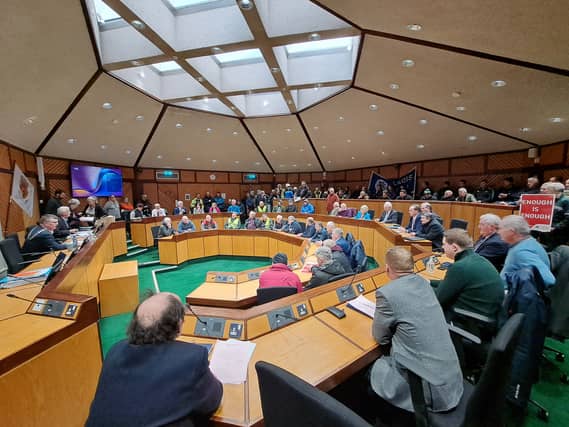

Reserved functions blended with a lot of ‘soft power'
So what do county councillors do when you've elected them?
There isn't a black and white answer to this question.
The Department with responsibility for Local Government says the role of a councillor is “busy, varied and comes with a lot of responsibility”. It says councillors play an important role in the development of policies and the making of decisions about issues that impact their local community.
It says they are also responsible for the governance and oversight of the Council, which includes ensuring the proper operation of the local authority and the making of critical decisions about budgets.
The Department says councillors are policy and decision makers about the operation of their local authority and the services it provides.
Councillors make decisions at council meetings. There are different types of meetings held by the local authority:
- An annual meeting (held in May/June each year)
- Ordinary meetings (usually held at the end of the month in Laois)
- A budget meeting (usually towards the end of the year)
- A special meeting (held occasionally
- Municipal District meetings.
- Special Policy Committee (SPC) meetings.
- In-committee meetings.
At the council meeting, every councillor is entitled to vote for or against resolutions put forward at the meeting. In most cases, a resolution is passed where the majority of the members present vote in favour of the resolution.
Local authorities make decisions about policies by passing ‘resolutions’. Resolutions are passed by councillors and are known as reserved functions of the local authority.
Resolutions can include:
- Annual budget decisions
- Housing policy
- Environmental protection
Local authorities can pass laws where they are empowered to do so by the Oireachtas. These laws are called bye-laws and are often used to regulate: Parking zones and parking fines; Litter control; the control of horses and dogs.
Councillors can table motions at meetings calling for actions on a myriad of local issues. They can also use motions to communicate to national Goverment a Laois view on a national issue.
Motions can also be used to campaign for health, education and other local services.
The Municipal District meetings allow councillors to address issues particular to the electoral areas they represent. This can range from potholes and public housing to the provision of housing. Councillor approval is also required at Municipal District level for local area budgets for road upgrades.
SPC meetings allow councillors to work with staff and others on the drawing up of policies such as economic development and housing.
At the first council meeting after the local elections councillors will decide on who sits on the myriad of committees that are external to Laois County Council but where the council's input is required.
A lot of power in Laois County council rests with the the executive led by the Chief Executive of Laois County Council. However, Councillors must be consulted and their approval sought in some key areas.
Annual spending budgets are drawn up by the executive which must be laid before councillors.
These huge multi-million packages must be approved by councillors.
Another key function is the multi-annual County Development Plan.
This is a fundamental function reserved for local government in Ireland. Councillor input and approval is required and pubic representatives can reject elements of what council staff have prepared. However, councillors do not have the final say on such planning. The Minister for Local Government can veto any changes made on the insistence of county councillors. This has happened with a number of county development plans in Ireland.
Councillors also have the final say on where land can be rezoned for housing or other reasons.
Councillors do not have the power to grant planning permissions nor are they involved in the decision making process. These powers were removed in the wake of development controversies that resulted in major planning tribunals investigating corruption in the planning process.
Councillors will however be asked for approval for social housing projects that councillors are embarking upon or partnering in with voluntary housing bodies.
Perhaps it's the 'soft power' that councillors have and being based in communities that can make them most effective in representing voters.
The very fact the people can contact their public representative about an issue and that this local politican has the right and power to lobby for them or seek questions to answers gives them a lot of clout.
Councillors can also facilitate the public in advancing causes or raising national issues at local level.
Earlier this year members of the IFA thronged County Hall in Portlaoise where they were allowed to make their case on challenges to famers as part of the Enough is Enough campaign.
Councillors previously have played key roles in local issues such as the retention of services at Portlaoise hospital.