Search


26 Mar 2026
Search
26 Mar 2026

Please allow ads as they help fund our trusted local news content.
Kindly add us to your ad blocker whitelist.
If you want further access to Ireland's best local journalism, consider contributing and/or subscribing to our free daily Newsletter .
Support our mission and join our community now.
To continue reading this article, you can subscribe for as little as €0.50 per week which will also give you access to all of our premium content and archived articles!
Alternatively, you can pay €0.50 per article, capped at €1 per day.
Thank you for supporting Ireland's best local journalism!

Therese Gunning, Legal Director at BT Ireland presents the 2nd place Senior Individual Technology Category Award to Joshua Corbett.

Budding Laois scientist Joshua Corbett from Vicarstown who won second place in his category at the 2025 BT Young Scientist and Technology Exhibition in Dublin, but he is not sitting back.
The impressive fifth year student at St Mary’s CBS Portlaoise wants to continue his research into therapy for people suffering central nervous system disorders like Multiple Sclerosis.
He spoke to the Leinster Express / Laois Live following his win about his ambitions.
“My project, “Development of a Novel Nano-QSAR Model to Predict Drug Delivery of Nanoparticles to the Brain,” focuses on using machine learning to overcome the challenges of delivering medicine across the blood-brain barrier.
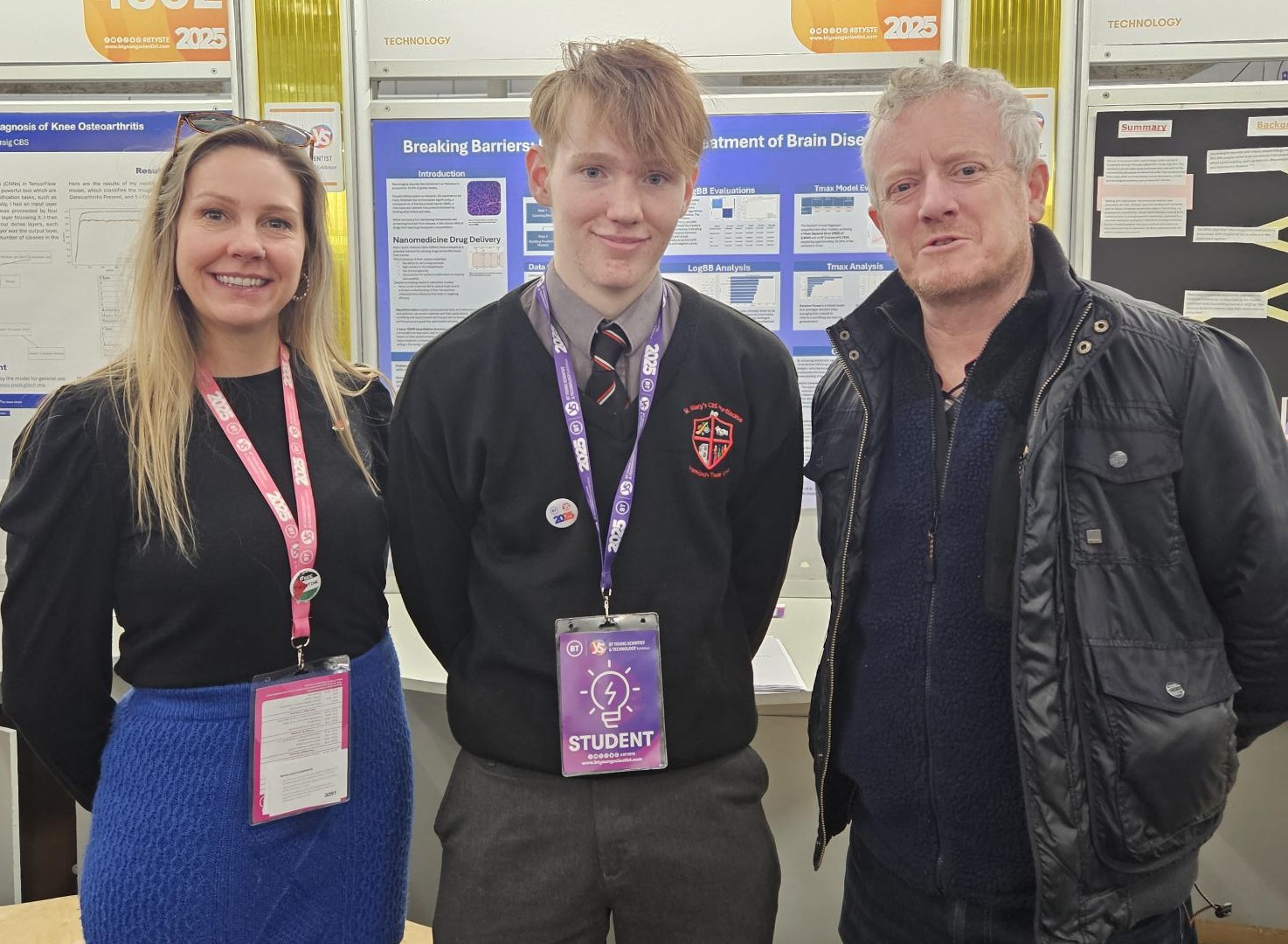
Joshua with his biology teacher Emily Barrett and St Mary's CBS vice principal Cyril Mulligan.
“It aimed to address gaps in understanding how nanoparticle, an emerging way of carrying medicine, properties affect brain targeting and drug biodistribution.
“My study integrated physicochemical and administration data of 403 nanoparticles from previous studies into predictive models to evaluate blood-brain barrier permeability, time to maximum concentration, and drug residence.
“These models, developed using machine learning algorithms like Random Forest and XGBoost, allow for rapid computer screening of drug carrier designs, reducing reliance on expensive experimental studies.
“This work is particularly impactful in advancing therapies for central nervous system disorders, by addressing a critical bottleneck in drug development by bridging laboratory findings with clinical applications,” Joshua explained.
Winning his award at the national science show was a big moment.
“Hearing my name was an incredible moment, and I felt a rush of pride and joy. But honestly, what has stayed with me more is the reaction I’ve received since winning. So many people have shared their personal stories, thanking me for working on something that touches so many lives. It’s a powerful reminder of why I pursued this project,” he said.
A lot of time went into the project.
“This work took months of dedication, and there were times I felt like giving up. But I didn’t, because the clock is ticking. Every four seconds, these conditions claim another life.
“Winning the award is amazing, but for me, it’s not the end, it’s just a milestone. There’s so much more to do in this field, and my biggest reward is knowing my work has brought us one step closer to better treatments.
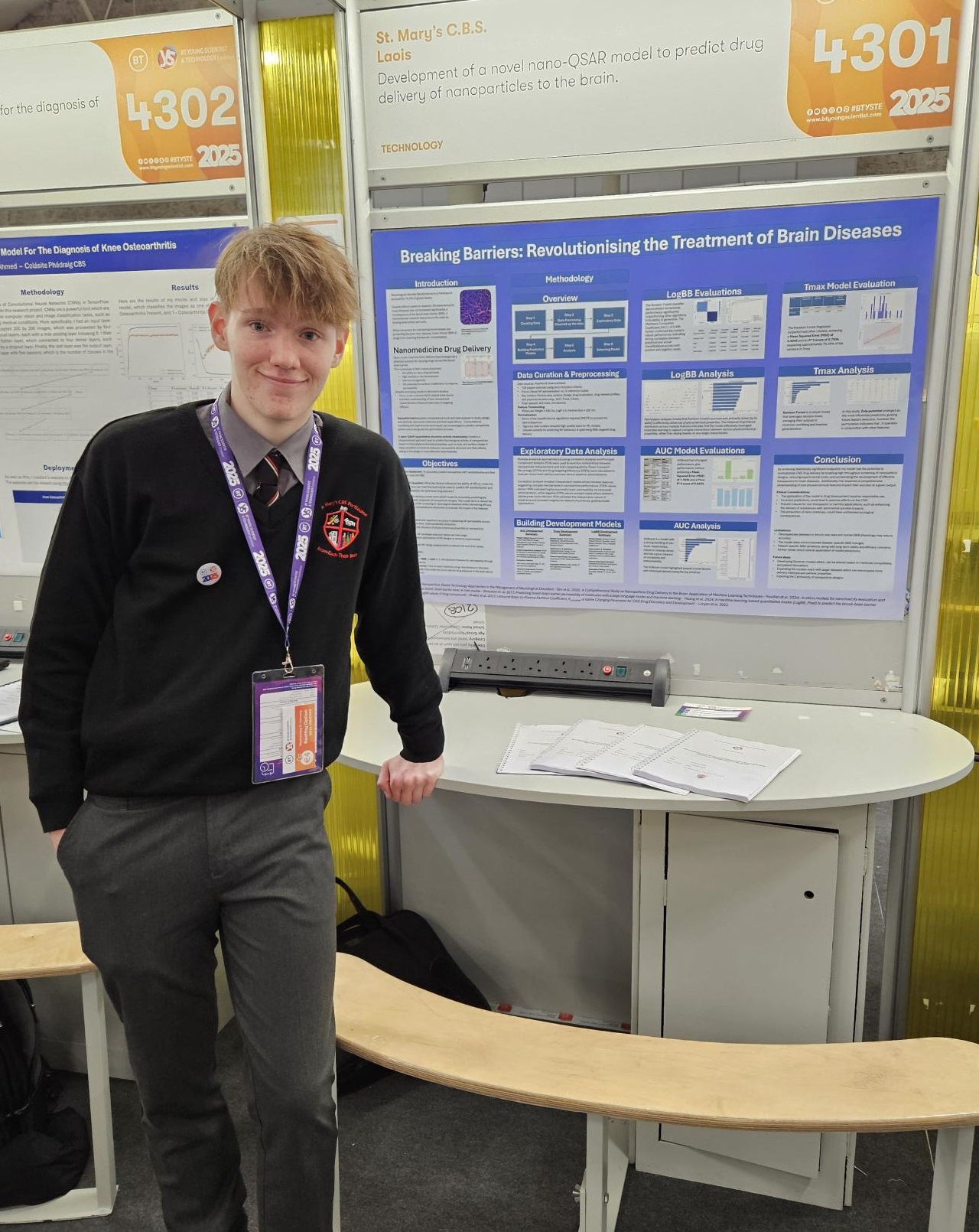
“To anyone out there, regardless of age or background: you can make a difference. Science is about persistence, and progress is possible if we commit to the work. So yes, I’m proud of the award, but I’m even more motivated to keep pushing forward,” he said.
He said that the BT Young Scientists exhibition was “fantastic”.
“The exhibition was absolutely fantastic, one of the best experiences of my life. From the moment I walked in, I was surrounded by so many brilliant and passionate young scientists, and it was truly inspiring. I realised it wasn’t just about showcasing my work; it was about being part of a community of people all working to solve real-world problems.
“I feel incredibly lucky to have been honoured in the way I was, but what stayed with me most was the chance to meet others who are just as passionate about science and innovation.
“It’s an experience I think everyone should have whether you’re a participant or just visiting. It’s inspiring to see the creativity and dedication of so many young minds in one place,” the Vicarstown teen said.
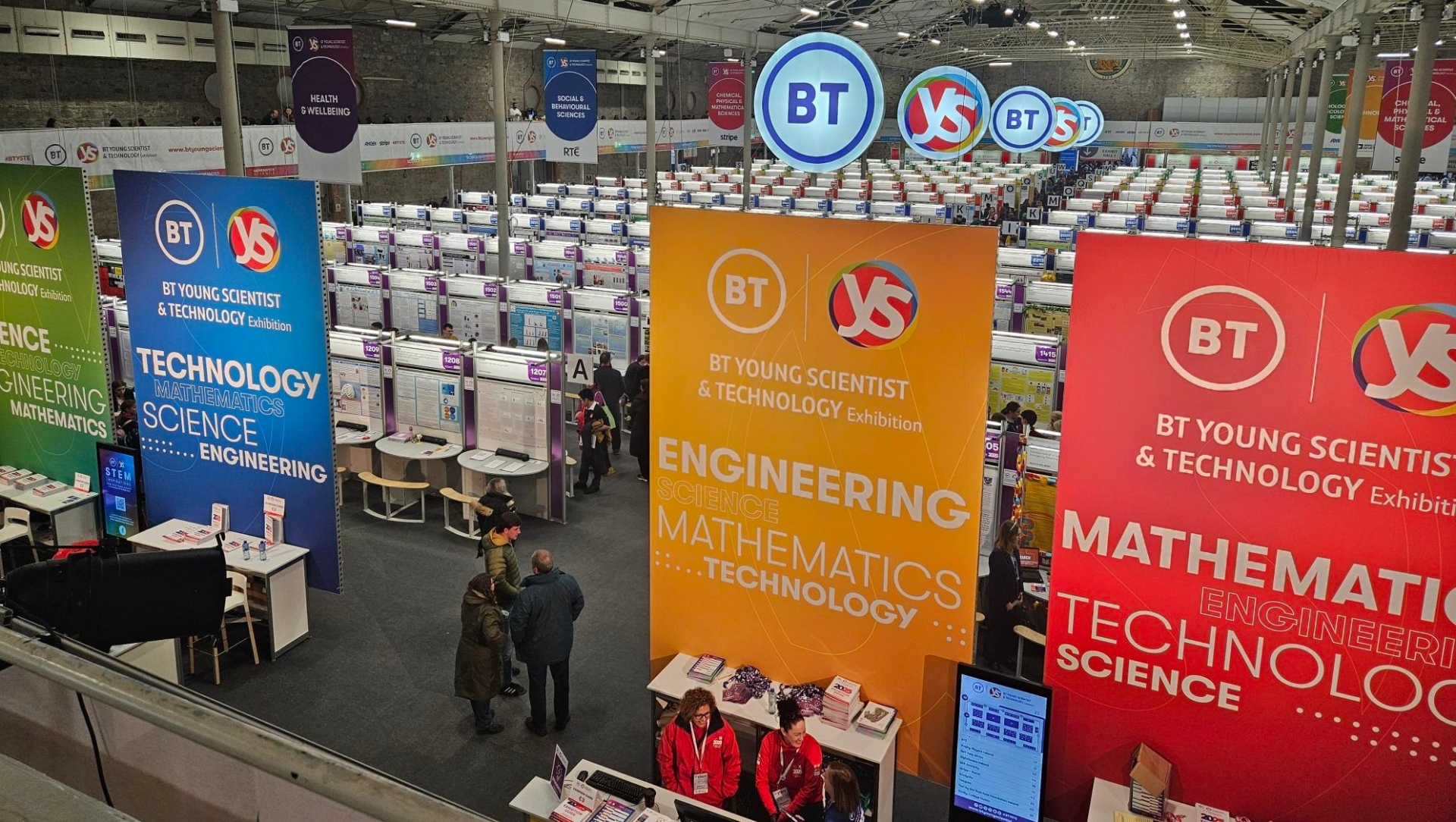
The 2025 BT Young Scientist & Technology exhibition at the RDS. Photos courtesy of Emily Barrett, Biology teacher, CBS.
He reveals his high hopes for his future.
“I plan to study electronic engineering at university and see where that path takes me, but my research journey definitely won’t stop there. I’m eager to access a lab in the future to test many of my findings and to continue advancing this work.
“In the long term, I’d love to pursue a career in nanoinformatics, combining nanotechnology and data science to drive innovation in medicine.
“One dream of mine is to eventually establish a non-profit organisation focused on developing advanced nanomaterials and medicines that can benefit people worldwide, ensuring accessibility and impact for everyone,” Joshua Corbett said.
"My project doesn’t focus on a specific disorder but rather the mechanism by which medicine is delivered. To put my work into perspective, neurological and central nervous system disorders alone account for over 10 million deaths annually worldwide. Much of this is due to the inefficiencies in how we deliver treatments, rather than the treatments themselves.
"One major advantage of my work is that it speeds up how we screen and evaluate potential therapies. Right now, even if we developed a cure for cancer tomorrow, it could take 10 to 15 years before it’s approved and reaches patients. My project could shave years off that process, saving both time and significant costs, while potentially improving outcomes for millions.
"This technology isn’t limited to one disease it has applications for thousands, from Alzheimer’s and Parkinson’s to depression and brain cancer. What excites me most is the possibility of seeing cures not just therapies emerge within my lifetime. If people across the globe collaborate in pursuit of something greater, I truly believe transformative progress is within reach," the young scientist said.
He explained his inspiration for the project.
"I can’t say I’ve personally struggled with one of these conditions, or that a close relative has, although I, like most people, know others who have. But my motivation was more about responsibility. I don’t think it’s right to sit on the sidelines when you have the ability to make a difference. I feel a personal obligation to stand up and take action, especially in an area where progress could save millions of lives.
"As for how I came up with the idea, I want to be clear: this kind of work isn’t like something out of Hollywood. There wasn’t a single “aha” moment or light switch that went off in my head. It was the result of months of research, reading, and trial and error. I went through dozens of ideas that I ended up discarding because they were too narrow in application, too costly, or simply infeasible.
"Ultimately, I wanted to work on something with real-world impact, something that could potentially address thousands of diseases by improving how we deliver treatments," Joshua said.
He is deeply thankful to his family and teachers.
"My parents, Catherine and James, have been incredibly supportive throughout this journey. Their patience and kindness, especially in the final weeks and days before the Young Scientist exhibition, meant so much to me. I even pulled an all-nighter to finish my poster and report book, and I doubt I’d have managed it without their encouragement.
"I’d also like to thank my teachers at St. Mary’s CBS for fostering my love of science. The school’s environment has been so inspiring and played a huge role in shaping my interest in this field. In particular, I want to thank Ms. Barrett, who supported me from the moment I came to her with my idea at the start of the school year. She even accompanied me to the exhibition and has been there every step of the way. I’m incredibly grateful for her guidance and enthusiasm," Joshua Corbett said.

Subscribe or register today to discover more from DonegalLive.ie
Buy the e-paper of the Donegal Democrat, Donegal People's Press, Donegal Post and Inish Times here for instant access to Donegal's premier news titles.
Keep up with the latest news from Donegal with our daily newsletter featuring the most important stories of the day delivered to your inbox every evening at 5pm.

This publication supports the work of the Press Council of Ireland and Office of the Press Ombudsman, and our staff operate within the Code of Practice of the Press Council. You can obtain a copy of the Code, or contact the Council, at www.presscouncil.ie, Lo-call 1800 208 080 or email: info@presscouncil.ie.