

TDs hear of impact of nitrates regulations on Laois dairy farm
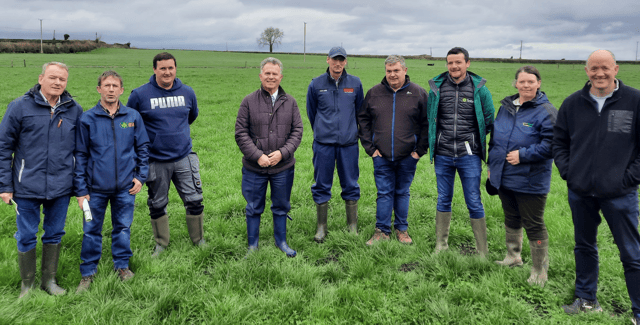

A delegation from Laois IFA met with local Oireachtas members on James Barber's farm at Rathdowney last week to see and hear how the nitrate regulations are working and the negative impact they are having on Jamesss dairy farm and the dairy industry in the county.
The new banding system and changes in the derogation limits were the two key issues discussed.
The visit to the Rathdowney farm came as IFA Environment and Rural Affairs Chair Paul O’Brien described as positive a commitment from the Minister for Agriculture Charlie McConalogue in the Seanad this week that he was going back to the European Commission to seek further flexibility around the Nitrates Derogation as part of the interim review.
“IFA had requested this, as we have serious concerns that the review won’t capture the impact of the measures that have been introduced on farms,” said Paul O’Brien.
“In 2022, the European Commission granted Ireland a nitrates derogation until the end of 2025.
“However, this included a condition that Ireland was required to carry out a two-year review of water quality based on data from 2021 and 2022.
“Based on the results, the maximum stocking rates could be reduced from 250kg to 220kg/nitrogen/ha for part, or all of, the country from next January.
“It is IFA’s position that the condition is flawed; it is well accepted that analysing a water quality trend over a two-year time period is too short to capture an overall trend.
“Also, measures introduced by farmers last year and this year such as banding and increased closed periods will not be captured in the monitoring data and their impact on water quality trends will be unknown,” said Mr. O’Brien.
The Environment Chair recently led an IFA delegation to Brussels to meet representatives from the European Commission to voice these concerns.
“Let me be clear: farmers understand their responsibility to comply with regulations to protect and improve water quality.
“We will continue to engage positively with measures that are scientifically proven to improve water quality.
“What we cannot accept is the introduction of regulations that will undermine the viability of the sector and further disrupt the land market, but may do little to improve water quality.”