

No progress on GAA integration in Laois

‘If you really, really were to think about it a lot, and every night you're going training and thinking about that, you would fall out of love with the whole thing’ - Mary Cotter, Laois inter-county footballer
No progress has been made on Gaelic games integration in Laois, despite Croke Park’s appeal for county boards’ cooperation. In the meantime, Laois LGFA and Camogie lead a nomadic existence, relying on the goodwill of clubs, Laois GAA and private venues for pitches and gyms to facilitate their inter-county teams.
In October 2025, the GAA’s Steering Group on Integration (SGI) sent an email to the county boards of the GAA, Ladies Gaelic Football Association (LGFA), and Camogie Association, requesting that they establish a County Integration Work Group by the end of the year. No such group has been established in Laois.
The SGI’s aim for County Integration Work Groups was to “provide a structured forum for local discussions, create space for two-way dialogue and shared understanding, bring together local knowledge and experience to inform integration planning, and support a coordinated approach to integration at county level.”
The email to county boards continued: “We genuinely value your insight and input. Your participation in these discussions will help ensure that the integration process reflects the realities and strengths of each county.”
In response, Laois GAA informed Croke Park that it will establish a work group when it is provided with a pathway as to where integration is going.
Niall Handy, Laois GAA’s full-time secretary, told the Leinster Express / Laois Live: “Laois are fully behind integration with Camogie and LGFA, but we want to be provided with a pathway of how that’s going to work. And that pathway must include details of finance.”
Asked if there would be any benefit to setting up the County Integration Work Group in Laois and contributing insights to Croke Park, Handy deflected: “We have expressed our opinions at those workshops and at chairpersons meetings in Croke Park on integration.”
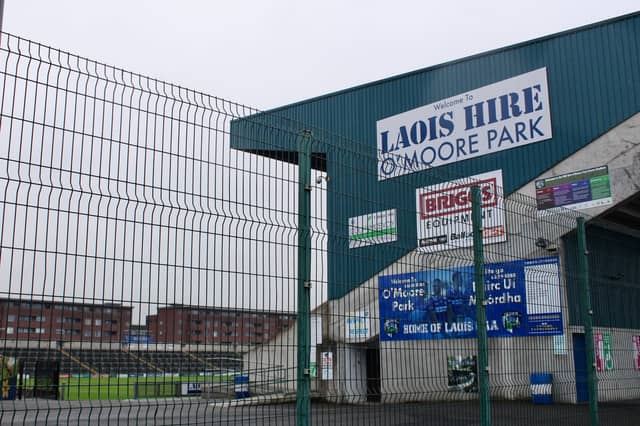
Handy highlighted that Laois GAA spent €1.3m on its inter-county teams last year and questioned where the funds will come from to equivalently finance Laois Camogie and LGFA. In the last ten years, he said, Laois GAA spent €4.5m on its facilities – the Laois Hire O’Moore Park stadium and LOETB Laois Centre of Excellence, a high-performance facility featuring gym areas, medical and physiotherapy rooms, catering facilities and three playing pitches.
“We’re catering for six intercounty teams, six academies here at the moment,” he said. “Their clubs helped finance this. We’re choc-a-bloc, we’re using other facilities to try and cater for everyone. So if integration did happen, and I’m to put three or four of our inter-county teams out of there, it’s going to cause a bigger row than we’re having already.”
He continued: “We need more pitches. If I had two more pitches, certainly we could accommodate it.” Asked if, with the facilities Laois GAA currently has, it would be willing to make any concessions regarding its men’s teams in pursuit of integration, Handy said: “I don’t think so,” clarifying, “That wouldn’t be a decision for me alone. That would have to be a committee decision.”
Handy also said local authorities should be preserving more green areas for public-access pitches. He maintained that, besides finance and facilities, he has no concerns about integration.
Laois LGFA and Laois Camogie also did not instigate the establishment of a work group. Paddy Dwyer, chairperson of Laois Camogie, said: “I did get the email, but it never happened. Who makes the first move? Who tries to get it going when everyone’s busy? The GAA have, like I said, they’re financially better off. The likes of us, the likes of the Camogie, we’re all volunteers, we’re working and trying to keep an organisation going.”
Martina Phelan, chairperson of Laois LGFA, said: “We did meet with [the chairperson and secretary of Laois GAA], and we had a lovely conversation earlier on in the year, and they did say, again, if the pitch is available, they’ll give us the pitch, but the pitch, unfortunately for them, it's so busy with all their lads' teams.”
“It was a positive meeting,” she said. “But they’re like us, they’re sort of saying: is it ever going to happen at the top? It has to happen in Croke Park. I think every county is waiting for guidance up there.”
Laois GAA’s position on integration is outlined in its annual reports, in which it has stated: "The main beneficiaries in this integration process will be Camogie and the LGFA, as they will be able to delve into the same pot of funds as the GAA, which dwarfs what they have at the moment.”
Dwyer does not believe that, in the event of integration, Laois Camogie would be a financial burden on Laois GAA.
“I don’t think we’d be a financial drain on them, because we’re able to raise our own money. We’re running already, so I don’t agree with that. What financial drain would we have on them? We’re not looking for money off them. We do that ourselves.
“I would be looking for funding at a higher level so we can have our own facilities. But to say we'd drain them of finance, I wouldn't agree with it. We’re able to run our own show.”
He continued that “it’s just, we find it harder to get up a step.” He explained, for example, that Laois GAA’s All County Clubs Members Draw is difficult to compete with from a fundraising standpoint. The lottery raises money for Laois clubs, and Laois GAA takes a cut. However, it is community members spanning the GAA, LGFA and Camogie Association who buy the €130 tickets to support their clubs.
The County Draw is Laois GAA’s “primary fundraising activity”, and Laois GAA appeals for clubs’ "co-operation" in similarly making the draw their primary fundraiser. In 2025, Laois clubs together raised €890,000 from the draw, and Laois GAA profited almost €140,000. So, Dwyer said, “it's very hard for us to come along with another €100 ticket and expect to get money for it.”
He also highlighted that grants the GAA receives through the government’s Community Sport Facilities Fund (formerly ‘Sports Capital’ grants) come with gender equality conditions which are not enforced. Land ownership or long-term leaseholding is a requirement for many of these government grants, which is why the Camogie Association and LGFA cannot apply for them.
Laois Camogie and Laois LGFA do not themselves own any facilities and rely on clubs, Laois GAA, and private venues to facilitate training and matches for their inter-county teams. Both Laois LGFA and Camogie are hiring gyms at significant expense, and Dwyer explained that even finding a gym that will cater to thirty people is a major challenge.
“We pay for the pitches every time we use them,” Dwyer said. “The [Centre of Excellence] and all that, they're hired pitches. We pay for every pitch that we hire off a club, because all these pitches have to be maintained. So we are providing money for all these clubs as well. We're not looking for free lunches.”
The three organisations meet once a year to broadly discuss access arrangements for O’Moore Park and the Centre of Excellence. Laois Camogie and Laois LGFA then send requests to book the pitches throughout the year.
Dwyer stressed that Laois Camogie is “building a working relationship” with Laois GAA and does not wish to criticise the organisation. “Baby steps,” he said. “That’s what I’m after. We’ll crawl before we walk, you know?”
“I have no qualms with Laois GAA,” Dwyer said. “I’ve no problem working with them, it’s not an issue. The biggest issue is that we all want the same place at the same time, that’s an issue. Because all the girls are in college, all the lads are in college. They come back to train on a Friday evening at seven o’clock. But we all can’t have the one gym in the Centre of Excellence at that time. That’s the reality of it.”
“And at the end of the day, they own the facility, we don’t,” he said. “So, we just plough on ourselves and find our own facilities at club level.” He added: “We can’t say that the boys are not important either, like, they are.”
“We all support the men and they all support us. I think it’s way better than what it was years ago, when I played,” said Phelan. She did note, however, that she has received messages from players and parents querying why certain LGFA matches are not in O’Moore Park when commensurate GAA matches are played there. She also noted that the LGFA’s bookings may be revoked if it is raining, to preserve the pitches’ condition for later men’s matches. While she acknowledges that Laois GAA itself is under pressure to accommodate its numerous teams, she suggested that the trade-offs can be unfair.
“We did meet with [the Laois GAA secretary and chairperson] earlier on in the year, and they said they’d give us the pitch if it’s free, only if it’s free, but sure it’s never free. They’ll put an under-ten match in the Centre of Excellence rather than give it to our under-sixteen final.
“The clubs are very good to us, but it’s so hard to get into the county grounds. It’s just impossible.”
Laois GAA aims each year to make O’Moore Park available for the Camogie and LGFA inter-county home matches and club finals, and, for the most part, it accommodates these major games in the stadium.
Last year, however, Laois LGFA requested to change the date of its senior club championship final booking after its season ran late. Laois GAA did not facilitate the change, it states in its 2025 Annual Report, “due to [the new date] being on the eve of [Laois GAA’s] own Senior and Minor Football finals, and the large number of games played in the stadium over that weekend.”
Handy said the LGFA final was not held in O’Moore Park “because we had agreed an alternative date with the chairperson and the secretary of the LGFA, and they changed, and we had finals booked for there on that date, and we weren’t taking our finals out of it.”
The final was played in Stradbally, which was disappointing for Laois LGFA and the players, particularly because ultimately, Phelan says, there was no GAA match in O’Moore Park on the day of the LGFA final.
“Stradbally was lovely,” she said. “But there was nothing in O’Moore Park that day. The pitch was idle. The grass was growing. There was nothing in it. So that really annoyed us, you know, and I said it in my speech that there was nothing in O’Moore Park, that they could have gave us that slot, but they didn't.”
Mary Cotter plays for the Laois inter-county ladies football team, and for St Conleth's club, which played Portlaoise in last year’s final. She said playing the final in Stradbally was frustrating, and the players questioned why a suitable time could not have been found to play in O’Moore Park, but, she said, “we’re not privy to those discussions”.
“Stradbally’s a great pitch, like they were very good to offer up their services, I don’t want to be saying anything bad about any club,” she said. “But it’s a county final, a Senior county final. Like it should be in the county grounds.”
A similar situation arose in 2023, when the LGFA’s request was denied to preserve O’Moore Park for Senior and Minor hurling finals the next day.
“We arrived [in Stradbally] and the intermediate final was on before us, and there are only two dressing rooms,” Cotter said. “Shanahoe had won the intermediate final before us, and we were using their dressing room. So, you know, obviously they were out celebrating on the pitch, but we all had to kind of stand around waiting for them to go in and clear out before we could go in. But somewhere like O’Moore Park, that’s not going to be an issue.”
Cotter said there are “one-hundred percent” imbalances between her experience of playing football for Laois versus her male counterparts. While “all the training is the same,” she said, “all the outside bits are different”. She described the male player’s experience as an “easier experience”, from higher reimbursement for expenses to regular access to facilities and support personnel like doctors and physiotherapists. She feels especially for her teammates in college, who are shouldering much of the expense of travelling home for training and matches, while having no time left in the week for a part-time job.
While the men’s team is fully catered for in the Centre of Excellence, the inter-county LGFA team cobbles together venues to complete its training schedule. Cotter described how, last year, they trained during the preseason at Heywood school. Once the season began, they trained in Mountmellick on Wednesdays and Annanough on Fridays. Her teammates attending college in other counties had to rush home to make a six-thirty session, as they had to be off the pitch by eight for one of Annanough’s own teams to train. Sundays, she said, “you could be anywhere”.
“We've always had what we've had, and we just get on with it. We're just looking for improvements year on year,” she said. In her ten years playing, she said, there have been “huge improvements”, due to the Gaelic Players Association’s (GPA) negotiations and the support of the LGFA county board, but there is still a long way to go before hers is “somewhat similar to the men’s experience.”
“I couldn't think too much into it because, I just, it would ruin it maybe,” she said. “If you really, really were to think about it a lot, and every night you're going training and thinking about that, you would fall out of love with the whole thing.”
Cotter finds it difficult to understand why integration has not progressed, particularly because an SGI survey of 30,000 members across the associations showed nine out of ten believed integration will be positive for Gaelic games. (The congresses of the GAA, LGFA and Camogie Association also voted in favour of integration in 2022.)
Cotter was disappointed, frustrated, but not surprised to hear that Mary McAleese had resigned as independent chairperson of the SGI, the body coordinating the integration of the three associations. McAleese stated after her departure that the GAA’s leadership was “lacking in vision” and that she suspects “there are people who are not entirely happy about the idea of including women in decision making at the top level of Gaelic sports.”
Cotter said: “You would think if it was going to happen in 2027, we would feel some of the changes happening already. I don't understand, I don't think any really explicit reason was given to players, even through the GPA. It was all kept quite vague.”
“All these male players, a lot of them have girlfriends, wives, sisters. They all see what goes into it – the same, you know, that it's the same,” she said. “I would imagine if there is anyone against it, it is the minority by a long stretch. I don’t feel that resistance talking to people.”
Phelan agrees that there is support for integration among male players in Laois. “The players want equal. Any lad that’s playing GAA wants equal. They see what their female counterpart does,” she said. “Their lives are totally at county level. They’ll do the exact same as the male counterpart, but the lads respect that as well, I know in Laois they do.”
“It's like we've one foot in, one foot out,” Cotter said. “We use their facilities, but we just have to take what we're given because we're not under the umbrella of the GAA. Like, it's either we step away, and we have our own pitches, and we do our own thing, and we're completely separate, or we're all joined up together, and obviously it just makes sense for us to be all joined up together.”
Both Dwyer and Phelan also considered that there may be a benefit to the Camogie Association and LGFA merging first. This year, for the first year, the Laois boards planned their fixtures together, avoiding clashes which, in the past, have left girls who play both codes with hard choices. While neither organisation owns land however, bilateral integration would not lessen their difficulties applying for grants and accessing pitches and gyms.
“I do think the Camogie and LGFA should really go together,” said Phelan. “But we don’t have pitches, so we can’t. We depend on the lads to give us a pitch.”
Phelan and Dwyer are encouraged by the success of ‘One Clubs’ in Laois, which bring hurling, camogie, Gaelic football and ladies Gaelic football together in the club unit, creating de facto integration for their members. Dwyer said: “I’m all for integration, because I feel every community has it done already in the club level. And I can’t see why we can’t be just one. It’s just so much easier for everyone. One membership, one everything, that’s it.” Handy said One Clubs in Laois are “working well”, but that it is “an entirely different scenario at inter-county level”.
Dwyer recalled attending a virtual meeting on integration coordinated by Croke Park.
“It was all about the executive level, who was getting what,” he said. “But that’s no help to anyone on the ground. That means nothing to us really. I’d love to see action rather than talk.”
He said he would like to see Laois become a “pilot county” for integration.
“So we’ll go down there, and we’ll integrate with them,” he said. “With [Croke Park’s] help. About the use of facilities. Who has preference over who? Does a fifteen-year-old have a preference over an adult woman? Them things. But remember, we own nothing. And I always say, it’s very hard to go to the round table with nothing in your hand.”