

Unity could cost up to 25 billion euro in year one, Fine Gael ‘blueprint’ says
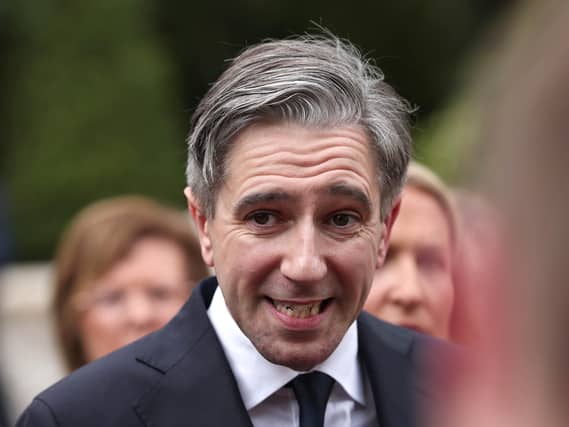

The potential cost of a united Ireland has been highlighted in the report.
The cost of a united Ireland could be up to 25 billion euro in year one, a report from an Irish Government party has said.
The figure is the highest year-one cost projection contained in Fine Gael’s “blueprint” for Irish unity which also sets out a more favourable annual cost of 3.2 billion euro in the first year depending on the design of the constitutional change.
The most adverse high-cost scenario also estimates a potential bill of 41.2 billion euro for year 25 after unity.
The party’s proposals also include a new junior minister for North-South relations in a dedicated unit within the Department of An Taoiseach and the establishment of a dedicated sovereign wealth fund to deal with the potential costs of transition.
The document is a key part of Fine Gael’s annual Ard Fheis and also includes modelling of the economic “cost and opportunities” associated with unification, with the Tánaiste saying his party wants to have an “honest and open conversation” on the issue.
The publication of the report comes shortly after Taoiseach and Fianna Fáil lead Micheál Martin suggested a body – the Future Studies Initiative – should be appointed to oversee research into future scenarios for Irish unification.
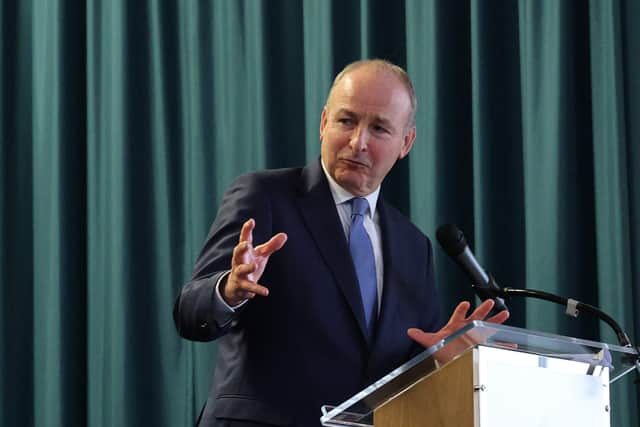
Opposition parties have also piled on pressure for the Government to make preparations for a debate on a united Ireland.
The Fine Gael blueprint drew on research from Professor Deirdre Heenan and Professor Stephen Kinsella.
Prof Kinsella’s findings are summarised into several scenarios on the potential cost to the Exchequer across 25 years – stressing there is “no single fixed cost of unity” and that a settlement with the British Government is critical in the estimates.
The analysis sets out four designs for a Unified Island – “Unitary”, “Federal”, “Managed Integration” and “Higher Cost” which use the status quo as a baseline – and makes projections on assumptions over whether or not the British Government keeps accrued pensions and debt interest.
“Federal” is defined as a unified island keeping a separate Northern Ireland administration that phases pay and welfare to Irish levels over 20 years and spends 500 million euro a year on running two systems.
“Higher Cost” is described as a situation where pay and welfare reach Irish levels on day one with no extra investment, and running two systems costs one billion per year.
“Managed Integration” is where pay and welfare reach Irish levels over 15 years, with 1.5 billion euro per year of extra investment in the first decade and 250 million a year for running two systems.
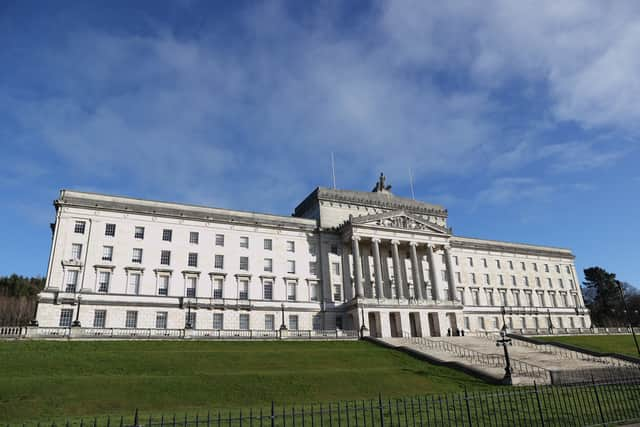
The cost to the Exchequer in year one ranges from circa 3.2-25 billion euro depending on the design and the deal with the British Government, according to the report.
The settlement with the British Government on pensions and debt is the largest policy choice in the early years, the report states – from between four billion euro and 24.8 billion euro.
Over 25 years, the report says the size of the pay and welfare gap “matters even more”.
“By year 25, managed integration costs 24.1 billion euro a year in the highest case and 4.2 billion euro in the lowest.
“Managed Integration phases pay and welfare over 15 years with early investment in Northern Ireland and is the design closest to a planned and supported transition.”
The highest-cost scenario puts a year 25 figure of 41.2 billion euro.
Fine Gael leader and Tánaiste Simon Harris had flagged the “blueprint” earlier in the year.
He said that those who aspire for a united Ireland must “do more than simply advocate for it”, adding: “We must be willing to ask the difficult questions, confront the practical challenges and undertake the necessary preparations for the future.
“Recent political developments and renewed debate about the future of Northern Ireland have brought these questions into sharper focus.
“Equally, recent tensions have reminded us that peace and reconciliation can never be taken for granted.”
He added: “For Fine Gael, Irish unity cannot simply be about changing constitutional arrangements or removing an invisible border.
“It must be about bringing people together, building trust and creating a shared future in which every identity, tradition and community is respected.”
The blueprint sets out several actions that can be taken immediately, preparations the party says should be undertaken as well as matters that need wider agreement.
It argues for improved all-island co-operation and stronger economic links as well as increased investment in reconciliation.
Fine Gael says a “Standing Constitutional Forum” should be established to enable discussion ahead of any potential referendum, while work on public services, taxation, pensions, welfare, economic transition, security and future institutional arrangements is also needed.
It said there should be a Minister of State for North-South relations as part of a Constitutional Planning Unit in the Department of Taoiseach.
It further says the Irish Government should create a new sovereign wealth fund to address the transitional costs attached to the possibility of a Unified Island – the Future Unified Island Fund (FUIF) and doubling the budget allocation for the Government’s Reconciliation Fund.
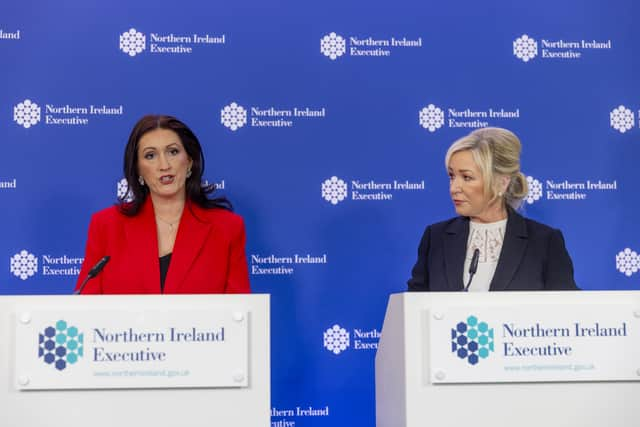
However, it notes that some of its proposals require further discussion alongside requirement for agreement on the extension of voting rights in presidential elections to citizens of Northern Ireland, strengthening NI representation in the Seanad.
Prof Heenan’s report argues – drawing on the experience of Brexit – that planning is not synonymous with support for unity and is instead good governance and risk management.
It further states there is a willingness on behalf of some unionists to engage in a process provided the outcome is not pre-determined, adding that reconciliation must “remain fundamental to the process but not stall progress”.
It also finds an “almost unanimous assessment” that current arrangements at Stormont are not working effectively.
The document was welcomed by SDLP leader Claire Hanna, who said: “There is now real energy and momentum behind this conversation.
“The Taoiseach’s recent announcement of a new body to examine constitutional futures, alongside Fine Gael’s Blueprint, demonstrates a welcome shift towards serious preparation.
“But unity needs unity. Government parties must now work together on a shared programme of preparation, drawing on the best ideas from across political and civic society.”