Denis O’Donovan of Ballyryan, Donohill, Co Tipperary
Search


12 Mar 2026

Please allow ads as they help fund our trusted local news content.
Kindly add us to your ad blocker whitelist.
If you want further access to Ireland's best local journalism, consider contributing and/or subscribing to our free daily Newsletter .
Support our mission and join our community now.
To continue reading this article, you can subscribe for as little as €0.50 per week which will also give you access to all of our premium content and archived articles!
Alternatively, you can pay €0.50 per article, capped at €1 per day.
Thank you for supporting Ireland's best local journalism!

Francie Gorman speaks at the recent IFA AGM in the Irish Fram .

A Bluetongue outbreak on a Wexford farm demands the highest level of vigilance by farmers and all in Irish agriculture, according to IFA President Francie Gorman.
While investigations are ongoing, restrictions only apply on the farm impacted, Mr Gorman said this means farmers can continue to market animals within the country while exercising the maximum level of vigilance because the disease has the potential to cause significant economic damage to the agri-industry.
“The lower temperatures and reduced midge activity, which is the main disease vector at this time of year, does allow trade to continue and potentially eradicate this disease,” he said.
The IFA said the Department of Agriculture has resolved some of the issues affecting the live trade, but must ensure all international trade certificates are amended so animals from Ireland can continue to be exported to these countries.
He said most EU Member States with BTV 3 have overcome the issues with live exports through bilateral trade arrangements. This is helpful and ensures this vital trade can continue, but there are additional costs involved for export to some countries that must be resolved.
IFA Animal Health Chair David Hall said everything must be done to prevent this disease from spreading.
“At this time of year, vector activity is low, which creates potential for the disease to be contained and eradicated. Trade disruption and potential production losses on farms would impact directly and solely on farmers, if the disease spreads,” he said.
Mr Gorman said the IFA will be engaging directly with the Minister for Agriculture Martin Heydon and his officials to ensure the impact of BTV and associated controls on farms are kept to an absolute minimum.
Heydon confirmed that the disease, which affects livestock including cattle and sheep as well as goats, deer and llamas had been found in a herd.
Mr Heydon said that dection of a case in the Republic does not come as shock.
READ ALSO: Minister Heydon confirms outbreak
“This is unwelcome news but unfortunately it is not surprising, given the spread of this virus across Europe, Great Britain and recently Northern Ireland. MORE BELOW PHOTO.
“I want to emphasise that bluetongue cannot infect people and does not pose any food safety or human health issue.
"My department has been actively negotiating revisions to many trade certs for third countries so that the impact of any outbreak would be minimised, and that work will continue after this news
“This finding arose from the routine ongoing surveillance my department has been carrying out, so that we can find the disease as early as possible,” he said.
Mr Heydon said the outbreak will have an impact on exports of cattle and sheep with additional costs and logistical issues required in order to comply with the rules set by the countries of destination.
He said there are no implications for meat and dairy exports to the EU, UK and most other international markets.
“My department has been actively negotiating revisions to many trade certs for third countries so that the impact of any outbreak would be minimised, and that work will continue after this news.”
A vaccine for the virus is being introduced in Ireland this year.
He also extended his sympathies to the affected farmer.
The Department of Agriculture advises farmers who suspect that one of their animals is infected to not delay in taking action.
This involves isolating the suspect animal(s) indoors immediately and report the case to the Department of Agriculture Food and the Marine. It urges farmers, and veterinary practitioners, and other relevant stakeholders should remain vigilant for bluetongue transmission.
To report a suspect case, please contact your local [link broken] (9am-5pm). Outside of office hours, you can ring the National Disease Emergency Hotline on 01-492-8026 (which is operational 365 days of the year).
In the event of an outbreak control measures have to be introduced to try and eradicate the disease. This involves restriction zones for a minimum of 150km in size, and movement controls for susceptible animals would be introduced. Other control measures, including mandatory vaccination (if available) or housing periods could also be implemented.
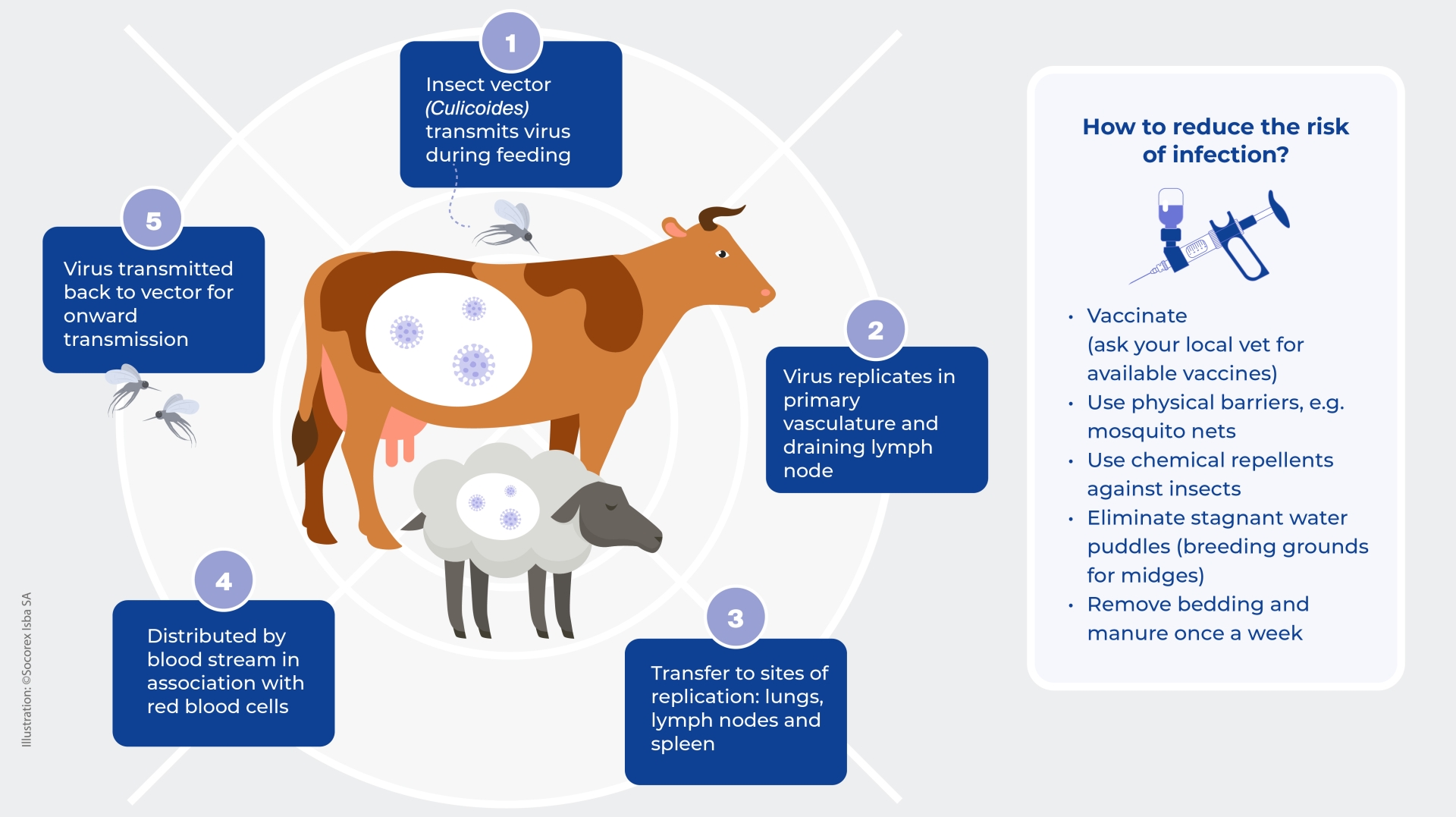
Bluetongue is a non-contagious, viral disease affecting sheep, cattle, goats, and camelids, transmitted primarily by Culicoides biting midges. It causes severe symptoms, including fever, oral ulcers, drooling, lameness, and, especially in sheep, mortality rates up to 70%. While not a risk to human health, it causes significant economic damage to the agricultural sector.
The Department says anoutbreak would have serious implications for the Irish agri-industry and can result in very severe on-farm impacts (serious illness and death), resulting in animal welfare concerns and economic impacts on the livestock sector.

Subscribe or register today to discover more from DonegalLive.ie
Buy the e-paper of the Donegal Democrat, Donegal People's Press, Donegal Post and Inish Times here for instant access to Donegal's premier news titles.
Keep up with the latest news from Donegal with our daily newsletter featuring the most important stories of the day delivered to your inbox every evening at 5pm.

This publication supports the work of the Press Council of Ireland and Office of the Press Ombudsman, and our staff operate within the Code of Practice of the Press Council. You can obtain a copy of the Code, or contact the Council, at www.presscouncil.ie, Lo-call 1800 208 080 or email: info@presscouncil.ie.