Denis O’Donovan of Ballyryan, Donohill, Co Tipperary
Search


12 Mar 2026

Please allow ads as they help fund our trusted local news content.
Kindly add us to your ad blocker whitelist.
If you want further access to Ireland's best local journalism, consider contributing and/or subscribing to our free daily Newsletter .
Support our mission and join our community now.
To continue reading this article, you can subscribe for as little as €0.50 per week which will also give you access to all of our premium content and archived articles!
Alternatively, you can pay €0.50 per article, capped at €1 per day.
Thank you for supporting Ireland's best local journalism!

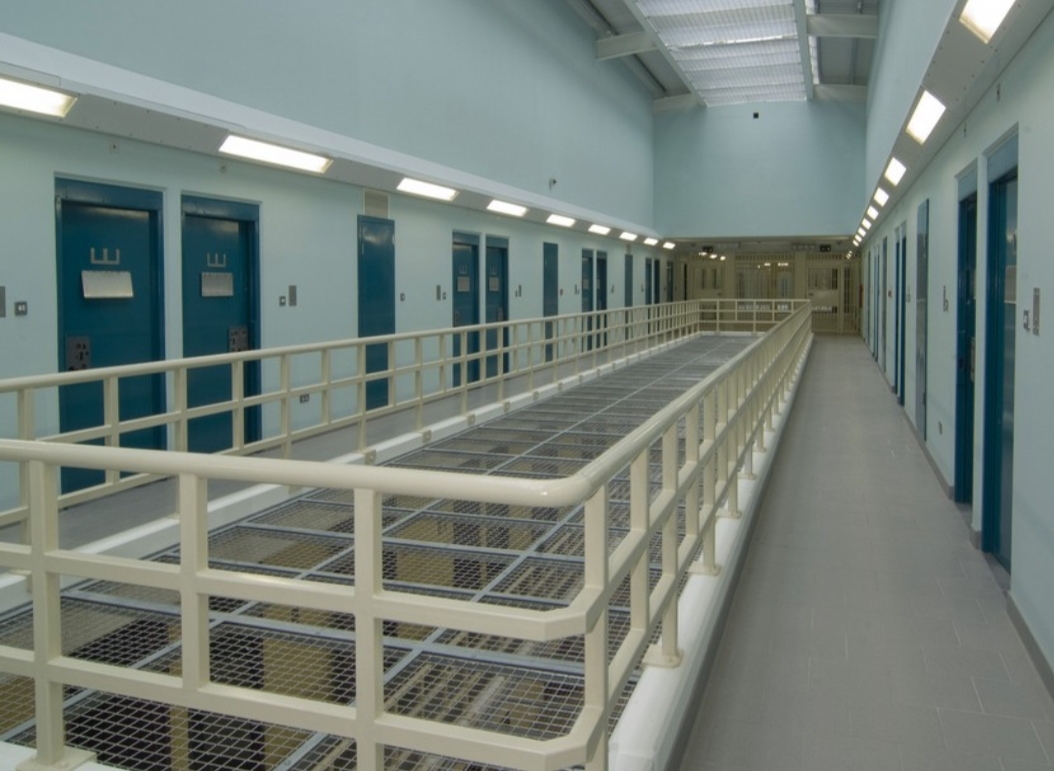
Midlands Prison Portlaoise

The Irish Prison Service has refused to reconsider CPR and other Basic Life Support (BLS) training and refresher courses for prison officers in the wake of the death of an inmate at the then-overcrowded Midlands Prison in Portlaoise.
The call was the key recommendation made in one of five Deaths in Custody investigation reports, published in February by the Minister for Justice Jim O'Callaghan. The reports were prepared following investigations by the Office of the Inspector of Prisons (OIP).
The report on the Portlaoise death relates to a Mr H, aged 23, who died by suicide in Midlands Prison on March 8, 2024. Serving his first spell in jail, he was one of three prisoners to die in the jail that year.
On 19 February 2024, the day Mr H was admitted to hospital, the Midlands Prison had 947 prisoners in custody and was operating at 108% of its bed capacity. By the date of Mr H’s death, the jail was operating at 109% of its bed capacity with 958 prisoners in custody at that time.
The OIP report acknowledged the swift response and ongoing care provided by both prison staff and healthcare personnel to Mr H from the initial moment when he was found unresponsive to the time when he passed away at St James' Hospital after initial treatment in Portlaoise hospital.
The report said it was also appropriate to acknowledge the care afforded to Mr H during the process of his transfer from Cloverhill Prison to the Midlands jail in 2022, in relation to both healthcare teams ensuring he had continuity of care and that his emotional well-being "remained paramount".
In addition, the granting of Full Temporary Release to Mr H, when it was clear that his condition was not going to improve, allowed his family to be by his side in his final hours without the presence of officers. The compassion shown to Mr H’s family, at such a difficult time, was commended by the OIP.
The OIP makes two recommendations.
They said the investigation into Mr H’s death has indicated that the lines of communication between different agencies, teams and specialities that operate within the criminal justice system are not always clear. The OIP recommended that clear guidance to be issued by the IPS Director of Care and Rehabilitation in relation to the referral process to psychology services.
The OIP found that the guidance should include a requirement to document all relevant interactions between health care staff and psychology services insofar as they relate to the well-being of persons in custody.
The second recommendation said the OIP previously called for Basic Life Support (BLS) training for recruit prison officers during the early part of their training and refresher courses for established staff after the death of an inmate in 2019.
"This recommendation was rejected by the IPS; however, it should be reconsidered as a matter of urgency. Unfortunately, Mr. H did not survive, despite the administration of early CPR by the officers who first attended to him. Yet, this case evidences how the swift actions of first responders provided Mr H with the best chance of survival and at the very least, allowed time
for his family to say goodbye to him. Officers trained in BLS could lead to more positive outcomes in the future," said the report.
The IPS accepted the first recommendation but not the second, and provided the same response as it did in 2019.
MORE BELOW PHOTO.
"Considerations for rolling out First Responder training were also based on the principle of equivalency. The response
time from the prison healthcare team to a prisoner is likely to be much less than the response time from the HSE to an
ambulance call-out.
"First responder training is provided to Gym Officers, PSEC Staff and Open Centre staff.
"It should be recognised that in the prison setting, a nurse is one of the first members of staff on the scene in an emergency situation. Basic Life Support and First Responder Training is a core element of the skillset of all nurses employed in the prison service," it said.
The Irish Penal Reform Trust said all the reports highlight serious systemic failures. It said the report into Mr H’s death exposes systemic weaknesses in the identification and management of suicide risk.
"Mr H had sought psychological support and was experiencing acute personal distress linked to relationship breakdown, housing uncertainty and concerns about access to his child. While prison staff and chaplaincy services engaged with him, a breakdown in referral processes meant that the prison psychology team never received his request for support. Although the emergency response following his collapse was prompt and professional, IPRT considers that the failure to ensure that identified psychological need translated into timely intervention represents a critical missed opportunity for prevention," it said.

Subscribe or register today to discover more from DonegalLive.ie
Buy the e-paper of the Donegal Democrat, Donegal People's Press, Donegal Post and Inish Times here for instant access to Donegal's premier news titles.
Keep up with the latest news from Donegal with our daily newsletter featuring the most important stories of the day delivered to your inbox every evening at 5pm.

This publication supports the work of the Press Council of Ireland and Office of the Press Ombudsman, and our staff operate within the Code of Practice of the Press Council. You can obtain a copy of the Code, or contact the Council, at www.presscouncil.ie, Lo-call 1800 208 080 or email: info@presscouncil.ie.