

HSE gets more time for stalled Naas hospital expansion
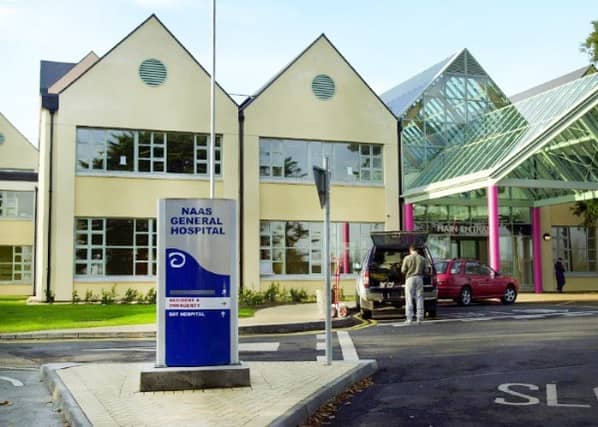

The HSE has received more time to carry out an extensive extension of Naas General Hospital which is a sister hospital of facilities in Laois, Offaly and Dublin.
The HSE has also confirmed that it is awaiting the green light to go to tender as it was resubmitted to proceed last year.
Under the extensive plans, the total floor area of the overall new development will be 2,703 square metres. A new two-storey extension would compromise of a new endoscopy / day services department on level three.
Also planned are physical medicine and oncology departments on level two.
A services / plant area is earmarked for level one.
The development will also consist of 231m2 alterations to the existing building to expand the oncology department.
Permission was originally granted in 2014 for five years but now work was carried out. Kildare County Council has now granted permission to HSE to extend this planning permission.
This decision was made on July 29 and was published on the Council's website.
The Kildare hospital is part of the Dublin Midlands Hospital Group (DMHG) which includes the two Midland Regional Hospitals in Portlaoise, Tullamore. St James', Tallaght, the Coombe and St Lukes hospitals in Dublin fall under the same HSE umbrella.
In a statement, the HSE said this capital development was submitted by Naas General Hospital to the DMHG and to the recent Department of Health Health Service Capacity Review 2018. It said Naas General Hospital is awaiting approval to proceed to tender for this development.
"The DMHG) continue to work on our strategic aims of improving access for patients, expanding services to respond in growth in demand and work in partnership to integrate across hospitals and community services.
"The main focus of our work with hospitals currently is on supporting the provision and development of our acute services in accordance with our service plan targets. The focus on the provision of capital developments, process improvements and unscheduled and scheduled care processes to improve waiting times aims to ensure patients can access the right services in the right place, improve overall efficiency in patient flow whilst ensuring a quality and safe service for our patients is provided in an integrated way with our community partners.
"The Sláintecare Report (2017) and Sláintecare Implementation Strategy (2018) signal a new direction for the delivery of health and social care services in Ireland. At its core, the strategy focuses on establishing programmes of work to move to a community-led model, providing local populations with access to a comprehensive range of non-acute services at every stage of their lives. This will enable our healthcare system to provide care closer to home for patients and service users, to be more responsive to needs and deliver better outcomes, with a strong focus on prevention and population health improvement," concluded the statement.