A photo of Scarlett Faulkner surrounded by candles in a church I PICTURE: Facebook
Search


03 Apr 2026

Please allow ads as they help fund our trusted local news content.
Kindly add us to your ad blocker whitelist.
If you want further access to Ireland's best local journalism, consider contributing and/or subscribing to our free daily Newsletter .
Support our mission and join our community now.
To continue reading this article, you can subscribe for as little as €0.50 per week which will also give you access to all of our premium content and archived articles!
Alternatively, you can pay €0.50 per article, capped at €1 per day.
Thank you for supporting Ireland's best local journalism!

Bobby Miller who leads Irish Grain Growers' says moral is very low with incomes on the line

Weather combined with other issues are driving farmers in Laois and other counties out of tillage farming despite it having a big economic and climate change benefit, according to Laois man who represents grain growers around Ireland.
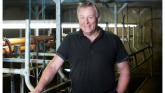
Bobby Miller, is Chairperson of the Irish Grain Growers' and is a tillage farmer near Stradbally.
He spoke to the Leinster Express / Laois Live about the acute problems facing growers locally and nationally this year due to the months of bad weather.
He also took time to discuss more fundamental issues that have driven thousands of farmers out of tillage and are threatening the viability of a farm sector the Government needs to achieve climate change aims.
Mr Miller said March is the ideal time to grow but not this year.
“We just can’t get out onto the fields. In an ideal world, we should have 70-80% of our crops in the ground. The vast majority of farmers have no spring crops gone into the ground yet.
“There are little pockets of ground sown but the clock is moving on and there is no settled weather on the horizon which is of no help,” he said.
Mr Miller said March last year was difficult but some work was possible due to the dry February. This has not been the case in 2024.
He said growers know the implications of late sowing.
“It means a later harvest. It affects yields and quality of crops. Malting barley is a popular crop in Laois but quality becomes an issue when you sow later. The risks become higher,” he said.
Mr Miller said crops grown in Laois and elsewhere must be of high quality for incomes.
“If premium is there it hits the pocket very hard,” he said.
Apart from grain growing, Mr Miller said the sowing of alternative crops such as beans has been limited. He said less than 5% of what should be sown at this stage in the year has been planted.
Mr Miller is clear that the tillage sector must be helped. He said the Irish Grain Growers have sought financial support via the national Tillage Stakeholder Forum chaired by Matt Dempsey.
He said such support can be justified on grounds other than the impact of weather. He said tillage farming is almost carbon neutral and so, plays a big part in helping the Government reach its carbon reduction targets.
He said the Ukrainian war has also dampened prices due to the importation of a large amount of Ukraine-grown grain. He said this has a knock-on effect financially for Irish growers.
Apart from financial impact, he said the frustration caused by this year’s problems is affecting farmers wellbeing.
“The moral is very low there is no question. We are getting to a stage where many are questioning the economics of growing crops,” he said.
He added that the Irish Grain Assurance Scheme (IGAS) recently said that the tillage sector is losing one farmer a week.
“From every angle the pressure is being put onto farmers,” he said.
He said farmers are looking at their options with retirement from tillage on the minds of many. He added that the next generation may not continue.
“It is hard for current tillage farmers to encourage the next generation to take over,” he said.
He said problems suffered in tillage farming have an economic impact outside of agriculture nationally and locally. He estimated that 11,000 people are employed in businesses connected to the tillage sector.
On a broader level, he said Ireland’s tillage sector has a big reputation for quality and yield.
“From a national and climate perspective it makes no sense not to support the tillage sector,” he said.
Mr Miller said that according to Teagasc data he is growing carbon-neutral crops which is 25 years of the national plan to be net zero.
“We are well ahead of the curve in terms of meeting climate change targets,” he said.
He said the tillage sector is also key to addressing Ireland’s biodiversity aims but if tillage farmers suffer so will biodiversity.
He also pointed out the dramatic loss of land for tillage.
“We have lost 40% of our tillage area in the last 40 years. They talk about culling livestock - the cull of the tillage sector has already happened,” he said.
He estimated that a further 50,000 acres will be lost in 2024.
He also highlighted a contradiction between the importing of grains and other agricultural products. He said 5 million tonnes of feedstuffs are imported into Ireland.
“We are highly regulated in the EU yet we are importing feedstuffs from Asia and the Mercusor countries,” he said.
He questioned those prepared to use Mercosur-sourced grain as a feedstuff while objecting to importing Mercosur beef and dairy products.

Subscribe or register today to discover more from DonegalLive.ie
Buy the e-paper of the Donegal Democrat, Donegal People's Press, Donegal Post and Inish Times here for instant access to Donegal's premier news titles.
Keep up with the latest news from Donegal with our daily newsletter featuring the most important stories of the day delivered to your inbox every evening at 5pm.

This publication supports the work of the Press Council of Ireland and Office of the Press Ombudsman, and our staff operate within the Code of Practice of the Press Council. You can obtain a copy of the Code, or contact the Council, at www.presscouncil.ie, Lo-call 1800 208 080 or email: info@presscouncil.ie.