

Flood defence progress in one Laois community years after devastating deluge

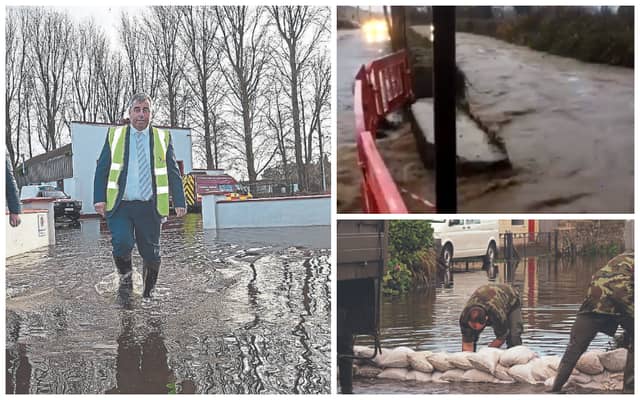

Clonasee, Mountmellick and Portarlington were hit hard by flooding in 2017
Plans for flood defences in one of three Laois communities hit by a rain deluge nearly eight years ago have finally got a point where a planning decision can be made.
While plans for Clonaslee have finally been allowed to go to An Bord Pleanála for consideration, the status of protection plans for the two big Laois towns of Mountmellick and Portarlington remains unclear. The agency responsible for deliver has also cautioned that delivery could take a decade.
Kevin Moran TD was Minister of State with responsibility for the Office of Public Works (OPW) when the three communities were hit to varying degrees in 2017 by flooding that had its origins in the Slieve Blooms. Mountmellick was worst hit with millions of euro other of damage caused to homes, businesses and other property.
He promised action to prevent a repeat when he visited Laois to inspect the damage in November 2017.
The Independent TD was reappointed to the same Ministry when the new Government was formed. He has now announced that following OPW approval, Laois County Council will proceed with the submission of a planning application for the Clonaslee Flood Relief Scheme to An Bord Pleanála for planning consent.
The flooded Clodiagh river burst its banks in Clonaslee after intense rainfall. The floods caused a lot of damage in part of the community before flood waters went on to wreak havoc in Mountmellick and Portarlington. Thousands of acres of farmland was also damaged.
"I wish to acknowledge the support from the community in Clonaslee that was valuable to inform the design of a scheme for its town, which will protect 74 properties at risk from flooding," he said in a statement to the Leinster Express / Laois Live.
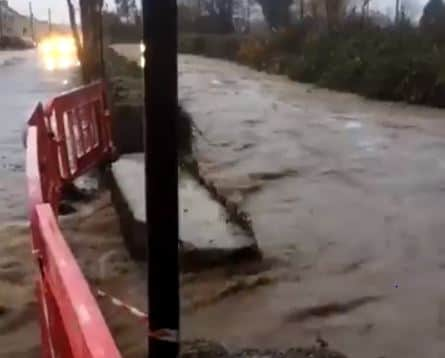
Pictured: River Clodiagh burst its banks in Clonaslee in 2017.
The scheme design for Clonaslee consists of the construction of flood defence walls, construction of embankments, installation of a debris trap and culvert upgrade along the Clodiagh River.
The OPW said the announcement, on April 25, 2025, is the outcome of "very detailed engineering analysis, environmental assessments and engagement with the public" on the sources of flooding from Clonaslee’s rivers and the options to protect the town.
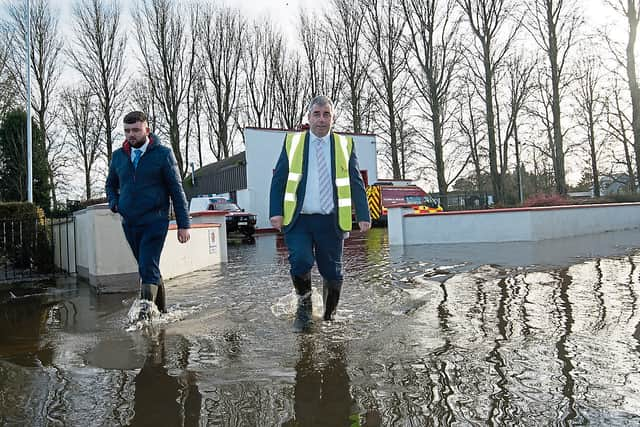
Pictured: Minister Kevin Boxer Moran in Irishtown Mountmellick in 2017.
The OPW was unable to elaborate on the status of the plans for the two big towns but said the cost of these schemes will be met from the Government’s commitment to managing Ireland’s flood risk through the €1.3bn for flood relief measures set out in the National Development Plan.
The OPW added that the design of this and all flood relief schemes is "future proofed" and is adaptable to meet the increasing flood risk from climate change.
The statement also said that the OPW has approved approximately €547,000 to Laois County Council under the Minor Flood Mitigation Works and Coastal Protection Scheme for localised flood relief works across 8 other locations in the county.
Laois County Council signed a contract with JBA Consulting JB Barry and Partners to advance the detailed design and implementation of the Mountmellick Flood Relief Scheme in 2019. The town was hit when the Rivers Owenass and Trigoue burst their banks.
Simon Walton, Director of Services with Laois County Council, told councillors in early April said the preliminary design of the Mountmellick scheme is complete and, subject to approval by the OPW with plans to be submitted to An Bord Pleanála by the end of June 2025.

Pictured: Irish Defence Forces personnel deployed to Portarlington to stem the tide of flooding in 2017.
The OPW explains that flood relief schemes are implemented in five stages. It says they are large, complex, multiannual projects that face a variety of issues and challenges, many of which are neither predictable nor within the OPW’s control.
It cautions that these challenges impact the timeline for flood relief schemes’ delivery, which can take up to "ten years" to design, develop and construct.
It says that to date, 55 schemes have been completed around Ireland, at a cost of some €500m. The OPW says that over 13,500 properties are protected by these schemes providing an economic benefit estimated to be in the region of €2 billion.