

Life saving screening for children launched at Laois hospital

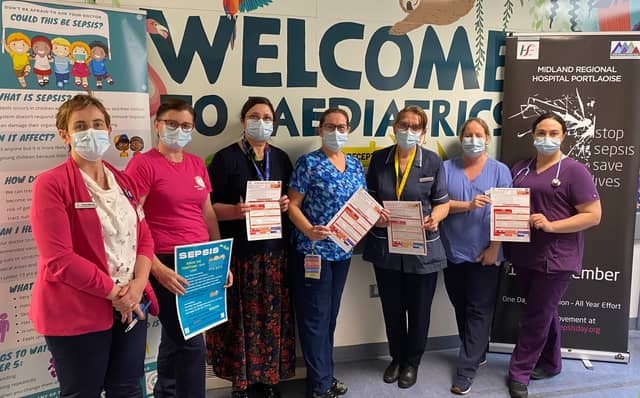

Portlaoise hospital staff are raising awareness of Sepsis on World Sepsis Day by holding an information stand to promote awareness of the early recognition and treatment Sepsis is a life-threatening reaction to an infection.
In addition to the awareness campaign, the Midland Regional Hospital Portlaoise (MRHP) staff are launching a new National Paediatric Sepsis Screening Form to help identify sepsis in children at the earliest possible opportunity.
The HSE says the Sepsis awareness day at MRHP has been organised by the hospital’s Nurse Practice Development Team.
Fiona Moore is Nurse Practice Development Co-ordinator.
“One in five people who develop sepsis will die, with early recognition and treatment this risk can be reduced. September is Sepsis Awareness Month and we are urging everyone to be aware of this life-threatening condition and to be familiar with the signs and symptoms and be ready to ask…. “Could this be Sepsis?”
Sandra McCarthy is the Director of Nursing at MRHP.
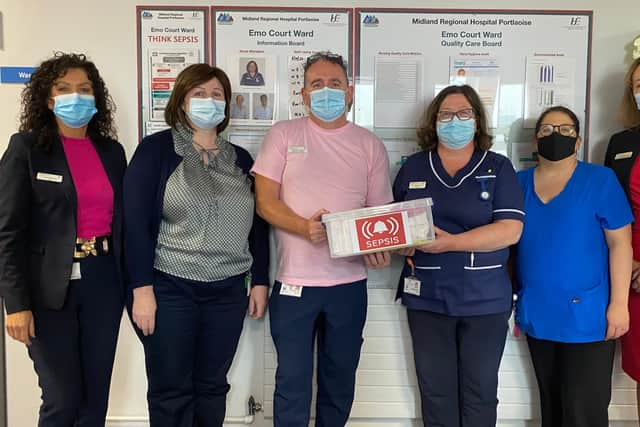
PICTURED: Ciara McHugh, CNM3, Dolores Flaherty, ADON , Padraic Dolan Clinical Skills Facilitator, Geraldine Britton, CNM2 Emo Court, Lorraine Slattery Staff Nurse, Sandra McCarthy Director of Nursing.
Consultant Endocrinologist & Physician Dr Ma Pyeh Kyithar is Clinical lead on Sepsis at MRHP.
“Recognising Sepsis is very important as Sepsis is a life-threatening medical condition, associated with significant morbidity and mortality if not recognised and not treated promptly. The World Sepsis Day event at MRH Portlaoise aims to promote the importance of Sepsis awareness among our patients, staff and the public,” said the consultant.
Dr Karn Cliffe, the Interim Chief Director of Nursing and Midwifery with the Dublin Midland Hospital Group, said lifestyle and awareness helps.
“Your chances of developing sepsis can be reduced by developing some good lifestyle habits, good hygiene, vaccination and knowing risk factors like medical conditions. If sepsis does develop, then early recognition and treatment can improve your chances of making a good recovery. Therefore, knowing the signs and symptoms and asking the question “Could it be Sepsis?” – may save your life or that of a loved one.”
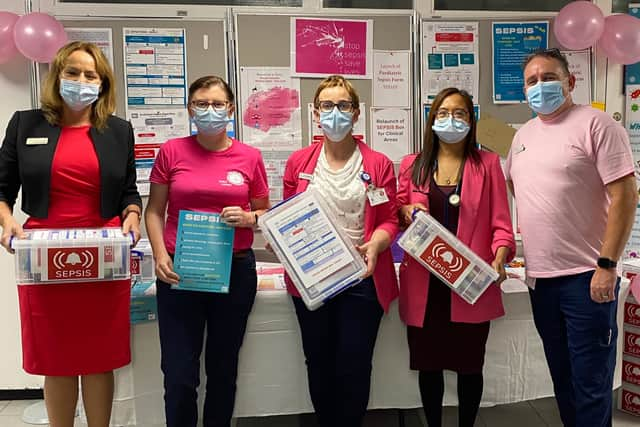
PICTURED: Sandra McCarthy, Director of Nursing, Karen Davis Sepsis Lead DMHG, Fiona Moore Assistant Director of Nursing, Dr Ma Pyeh Kyithar Consultant Endocrinologist & Physician, Padraic Dolan Clinical Skills Facilitator.
The HSE outlined the most commonly reported symptoms:
- Slurred speech, mild agitation, confusion, ‘Not feeling right’
- Extreme aches and pains in your joints, temperature of 38֠ and higher or lower then 36
- P Have not passed urine in last 12 hours? No urge to pass urine?
- Short of Breath. Can you finish a sentence without pausing?
- Are your lips tinged with blue?
- Is your heart racing very fast?
- Are you persistently dizzy when you sit or stand up?
- I feel like I’m going to die
- Skin appears mottled, blueish in colour or new red rash that is still visible when pressed on by your finger or glass (glass test).
Sepsis in children signs and symptoms to look out for include:
● Abnormally cold to the touch
● Looks mottled, bluish or pale
● Breathing very fast
● Is unusually sleepy and difficult to wake
● Has a rash that does not fade when you press it
● Having fits or convulsions
Also, in children under 5, watch in particular if:
● Not feeding
● Vomiting repeatedly
● Has not had a wet nappy in last 12 hours
The HSE said figures reported in excess of 12,000 people were treated for sepsis in hospitals last year with approximately 1 in 5 people dying as a result of developing sepsis. For context, Sepsis kills more people each year than heart attacks, stroke or almost any cancer. Sepsis is a global healthcare problem with an annual death toll in excess of 11 million people.