

Blueprint for Laois Offaly natural amenity wins national award

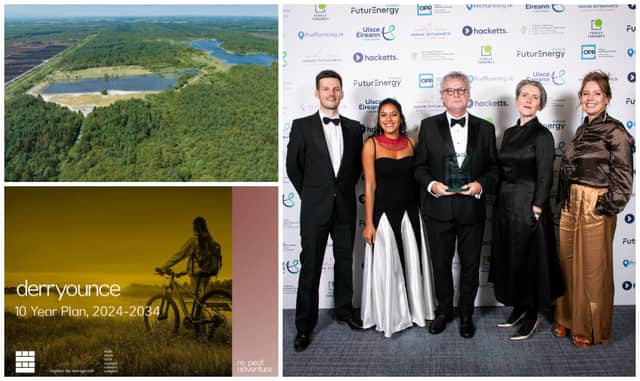

Offaly and Laois project scoops Biodiversity Planning Award for Portarlington natural amenity plan
A strategy for a community-backed natural amenity on the Laois Offaly border in Portarlington has won a national planning award for biodiversity.
The Derryounce Lakes & Trails 10 Year Plan (2024-2034) is a strategy that aims to transform the area into a "Regenerative Tourism Destination" and a key trailhead within the Midlands Cycling Destination, with the goal of delivering economic, social, and environmental benefits.
Launched in May 2024, the plan for the Portarlington amenity, supported by the Outdoor Recreation Infrastructure Scheme (ORIS), emerged from a public consultation and involves collaboration between Offaly County Council, Laois County Council, and other local and community stakeholders. Key objectives include increasing visitor numbers, promoting sustainable tourism, improving active travel, and developing the site's infrastructure to connect to the wider Blueway and Greenway networks.
The blueprint impressed the Irish Planning Institute (IPI) so much that they have announced its authors as the winners of the 2025 Irish Planning Awards.
SLR Consulting, Studio Aula and Haller Clarke took home the top prize in the 10-year roadmap from the biennial awards, which the organisers say "recognise and celebrate outstanding achievements in the planning profession, including projects and plans at a local, county, regional and national level".
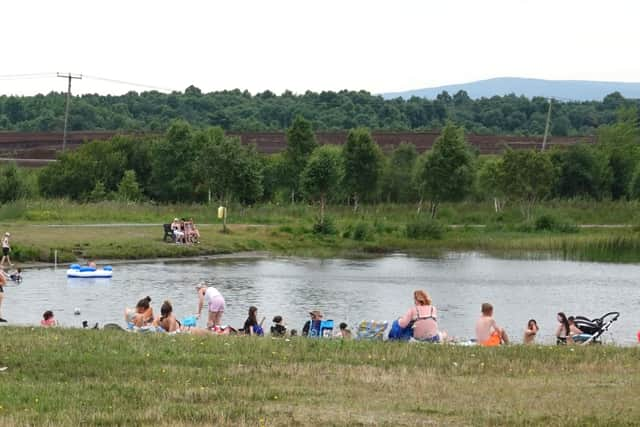
Derryounce Lake is popular in the summertime, affectionately winning the name Costa del Sod.
Offaly County Council (OCC) commissioned SLR Consulting to prepare a non-statutory 10-year Development Plan for the Derryounce Lakes & Trails in June 2023.
The joint Offaly-Laois Portarlington Local Area Plan identifies Derryounce as an important heritage resource with the potential for environmental and economic benefits, with significant objectives for its conservation and enhancement.
Derryounce Lake, like Lough Boora, was artificially flooded in the late 20th century following its peat exhaustion. When all viable layers of peat were extracted, the gravel and sand layers beneath were used to create an informal beach edging the lake. Coillte coniferous forest plantations surround the site.