

Serious concern in Laois after grass ‘sizzled’ by drought


Laois IFA leader urges farmers and the Government to prepare for drought fallout
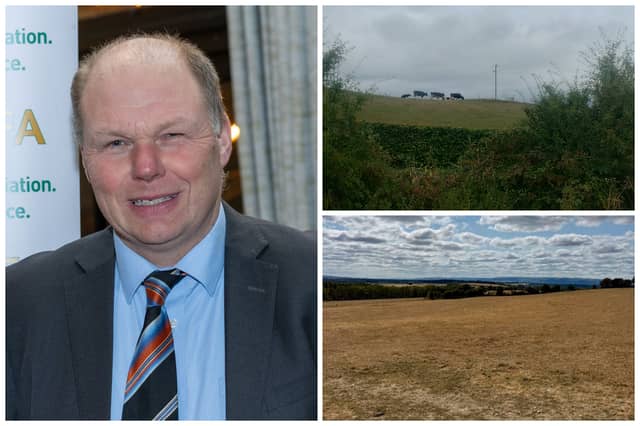
Lessons from previous droughts must be applied by farmers and the Government to prevent farms from hitting problems this winter, following a summer which ‘sizzled’ grazing grass across Laois, according to the Laois IFA Chairman.
Henry Burns says the Government must have a plan to step in with support to help farmers also concerned by what the coming months will bring.
Commenting on the impact of the summer weather locally, he explained that, heretofore, in normal dry summers, farmers on cooler, wetter land fare better, but this has not been the case this year.
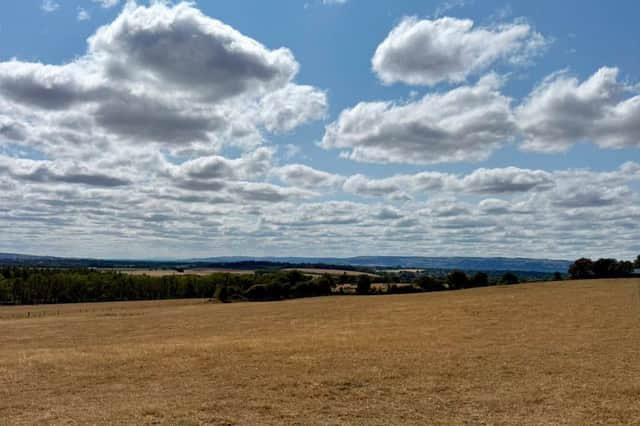
"The hot weather at the end of June burnt off grass. It sizzled it and did a lot of damage. Since then there hasn’t been a lot of rain,” he said in an interview with Leinster Express / Laois Live.
The IFA leader said farmers in other parts of the county, where drier soils generally require some drought provision every year, have been feeding cattle for a prolonged spell due to the extended drought.
He said silage has also been impacted by the weather. While the first cut silage season was good, Mr Burns said second cuts of silage “either didn’t amount to much or were very light”.
He said some farmers have either grazed what would have been the second cut or zero-grazed it, and so there is no reserve.
The IFA Chairman said it is too early to begin using first cut of silage.
"As the weeks go by, people are getting concerned,” he said.
He contrasted the situation to the last drought of 2018, when rain came in late July and August, causing a lot of grass growth up to Christmas. He added that tillage farmers were also encouraged to grow for livestock farmers that year.
While he said there is time for some recovery in the situation, he said many livestock farmers are concerned it will not be possible to make up for damage done at this stage.
"It is serious for people,” he said.
On the tillage side, he said the harvest is largely complete. While the quality is good, he said yields are down, with a slippage in tonnage due to the shorter growing season. He said those farming on drier soil would likely have experienced a very poor crop return.
As to the potential for a fodder shortage, Mr Burns said farmers and Government need to plan. He believed that there is a sufficient supply nationwide of feed, but fodder may not be accessible in the areas facing shortages. He said the supply situation will not be clear until Teagasc compile figures.
Regardless of what Teagasc finds, Mr Burns believes it is time to convene a feed committee as was set up after the 2018 drought. That committee was established by the then Minister to prepare for all eventualities following lessons learned when fodder ran out in parts of Ireland in 2013.
"It would bring urgency and planning to it,” he said. MORE BELOW PHOTO.
Locally, he believes Laois farmers should be able to tap into a large quantity of straw, yields of which he said have been relatively stable. He added that there is also a supply of quality Irish grain that can be tapped into at good prices.
He cautioned that there are variables on the horizons
He highlighted the impact of the Carbon Border Adjustment Mechanism (CBAM) levy – an EU policy tool that places a carbon price on fertiliser imports to the EU.
Mr Burns said this, combined with the Iran War, has added up to €200 a tonne to the price of fertiliser. He said that if rain comes in sufficient quantity, farmers would want to be able to spread fertiliser to encourage grass growth. However, this has to be made financially viable for farmers, so the Government should top up an EU fund to make fertiliser more affordable with money from the Irish Exchequer.
The Mountmellick-based farmer also suggested that the fertilising spreading season may have to be extended beyond the end of August to take advantage of autumnal growth if the weather changes.
Another area of help for farmers could be in the area of fodder transport. He also hopes the banks will have to show support via loans and finance, as such an exceptional weather event may require a recovery period of two to three years.
“It will not be a problem if it can be dealt with over two or three years, but it will be a problem if a farmer has to finance their response over a year,” he said.
Another issue facing farmers is the falling prices. He said milk prices are not covering current production costs with dairy farmers forced to spend up to €4 a day extra per head feeding cows.
As to whether the drought has caused farmers to be conscious of climate change, Mr Burns said the extremes are presenting a new challenge. Nevertheless, he believed that Irish farmers continue to be able to supply the meat factories and dairy plants, and grain has been harvested. He said the early season also allowed farmers to harvest a substantial amount of silage.
Mr Burns spoke to the Leinster Express / Laois Live on the day the European Central Bank said food prices would be the main driver of inflation in 2027. The bank pointed to weather as a factor.
Chief Economist with the European Central Bank Philip Lane commented on RTÉ: "These weather events, like El Niño, predictably will lead to more pressure on inflation. In fact, our calculations say this is mostly going to be into 2027," he said.
Mr Burns said farmers have very little say in what price consumers will pay for food. As an example, he said the price farmers are getting for milk is much the same as in 2025.
He said supports are central to farming’s sustainability, and such supports are good for the country’s economy and rural communities via jobs.
Minister Martin Heydon issued the advice on the day of a meeting with Teagasc and the main farm organisations to discuss the impact of the prolonged dry weather on farming.
In a statement, Minister Heydon acknowledged what was described as “a stressful time for farmers”, particularly in the east and south of the country, the regions most impacted by the current prolonged dry spell. He said the meeting on August 18 was an opportunity for stakeholder organisations to outline the challenges that farmers have been dealing with due to weather that has caused drought in many parts of the country, including in Laois.
The Kildare TD called on farmers to plan.
“It is important that farmers take appropriate action to ensure sufficient fodder stocks for the coming winter. Completing a fodder budget is critical to establish if and what action needs to be taken at farm level, regionally and nationally. In light of the evolving situation, farmers should continue to update their fodder budget on Pasturebase Ireland or through their advisor,” he said.
Mr Heydon said he had asked the Chair of the National Fodder and Food Security Committee, Mike Magan, to convene a meeting of the Committee soon. This Committee includes representatives from my Department, Teagasc, Bord Bia, the farm organisations, banks, industry representative bodies and the farming media.
"This will provide a forum for communicating the latest information on fodder availability and clear advice on what farmers should do. The current situation is adding costs on affected farms, and I would encourage farmers to engage with their banks, merchants, and co-ops on any cash flow concerns,” said the Minister.
Minister Heydon continued by saying that the Government is committed to supporting the sector in what he said has been a “difficult year”.
" The call from farm organisations for additional supports will be considered when the full picture is available and in the context of Budget 2027. Many farm organisations also called for flexibilities on a range of measures, which will be kept under review.
“Finally, I would encourage farmers to reach out for support – whether that is to their advisor, their farm organisation, or the many other support services. Help and advice is available," said Minister Heydon.
Met Éireann’s farming section said on Wednesday, August 19, that while showers and rain are forecast for the coming week, any reductions in soil moisture defecits will generally be slight with restrictions to growth continuing and near-drought or drought conditions persisting in parts of the south and east.