

Luxurious Midlands mansion bought by Irish billionaire for incredible sum

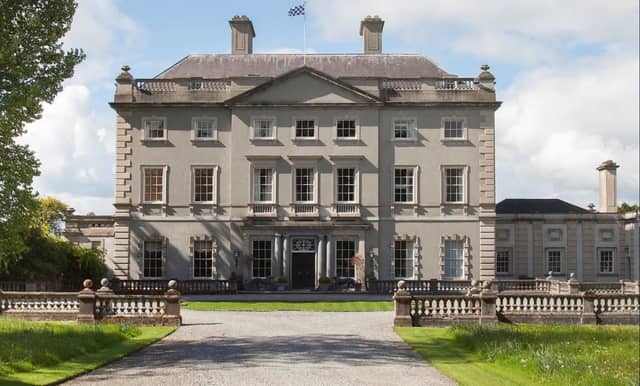

A millionaire British banker has sold the landmark Abbey Leix House mansion in Laois to a young Irish tech billionaire.
The co-founder of Stripe, John Collison, has reportedly paid a massive asking price of €20 million to buy the house and majestically big estate on the outskirts of the Laois heritage town.
Formerly in the ownership of the de Vesci family, the house was saved from dereliction and brought back to its former glory by Sir David Davies after he bought the house and 1,200 acres of the demesne from Viscount Tom De Vesci in 1995.
He published a splendid book on the property in 2017 and spoke about what Abbey Leix House means to him.
However, within two years he put the house on the market with plans to downsize to another property in Wicklow.
The sale was handled and marketed internationally by the famous Sotheby's. It listed the property at 26,910 sqare foot property at €20 million.
The Irish Times reports that a statement issued through Sotheby’s from Mr Davies said he was pleased to confirm that his trust has contracted to sell the house and the majority of its contents to a private buyer.
Collison, who is aged just 30, is a native of Dromineer, Co Tipperary but grew up in Limerick. He is President of Stripe which he co-founded in 2010 with his brother Patrick. According to Bloomberg Billionaires Index, his net worth was estimated at US$11.4 billion making him one of the wealthiest people from Ireland.
Stripe is an Irish-American financial services and software as a service company headquartered in San Francisco and Dublin. The company primarily offers payment processing software and application programming interfaces for e-commerce websites and mobile applications. Elon Musk was among those who backed the setting up of Stipe.
Laois is home to several landmark mansions dating from the Queen's County era such as Emo Court and Ballyfin House. Sothebys describe Abbey Leix as one of the most venerable 18th-century houses in Ireland in its sales literature.
"A splendid and most distinguished Irish 18th-century mansion positioned within a remarkable and ancient woodland demesne of over 1,000 acres.
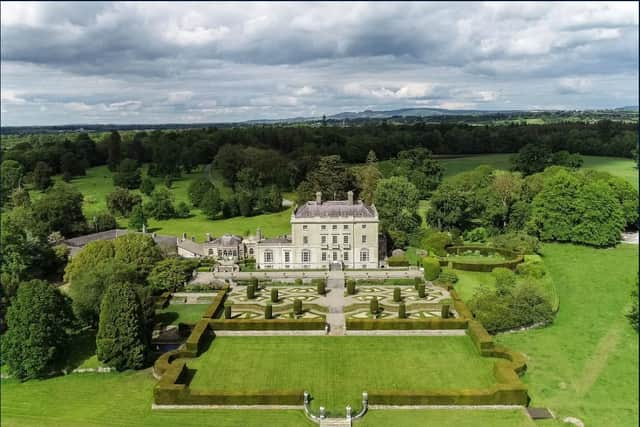
"In any list of important Irish country houses Abbey Leix has a prominent place. The late-18th-century mansion, clothed in the Italianate manner in 1859-60, enjoys a remarkable position within a private estate comprising some 1,120 acres and includes some of Ireland’s most notable remaining ancient woodland and extensive frontage to the River Nore," it says.
The auction house says the accommodation is "grand and beautifully" augmented by 10 lodges and cottages on the estate.
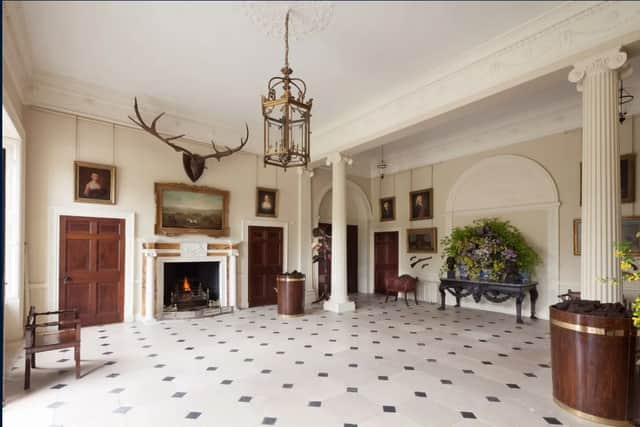
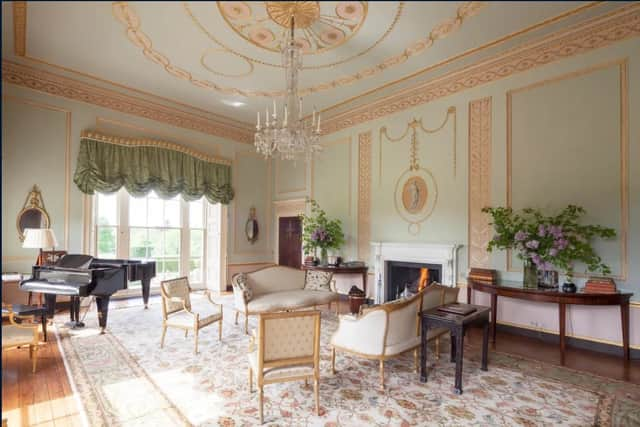
There is a deep hall, with a screen of columns separating it from the east-west-running staircase hall and corridor. The music room at the south-eastern corner of the house retains the light, decorative plasterwork for which Wyatt was so admired. Plaster roundels framed by swags of husks were decorated with grisaille by the artist De Gree a few years after completion, probably about 1785.
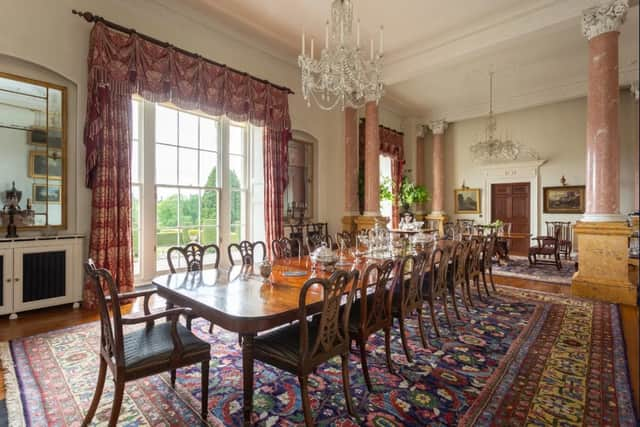
In the middle of the 19th-century the Italianate character was adopted and the great Classical library and a conservatory were added. At the same time the front of the house was enclosed within an Entrance Court with terraces added to the rear. A comprehensive and sympathetic restoration was undertaken in 1995. A new state dining room was created.
The whole north-west corner of the accommodation was redesigned to provide a new family room, kitchen and butler’s pantry. A considerable programme of conservation of the major rooms followed. T
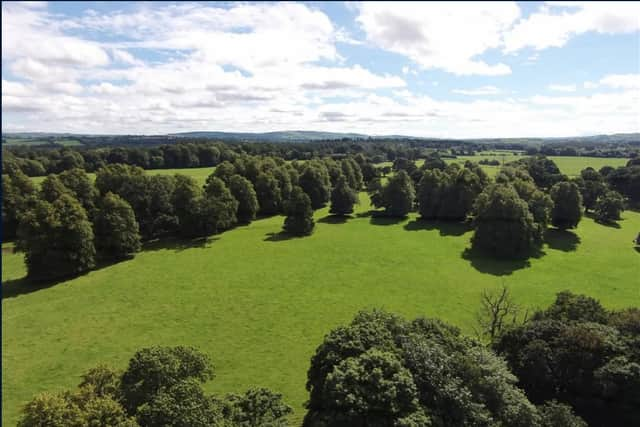
Apart from the importance of the house the estate is invaluable.
"Abbey Leix has one of the most important collections of trees in Ireland. Whereas elsewhere in Ireland the primeval forests of oak, birch, alder and willow have been almost entirely depleted, the woods on Park Hill across the river from the house are among the last surviving remnants of Ireland’s ancient woodland.
"Abbey Leix, like so many places in Ireland, owes its origins to religious settlement, and specifically to the French Cistercian monks who came to Ireland in the mid-12th-century. The present demesne evolved out of the monastery’s granges, woods and fields. One tree, the oldest oak in Ireland still survives from this period. The de Vesci family fashioned a landscape as beautiful as the house they built during their ownership between 1675 and 1995," says Sotheby's.
The property also contains a stud farm which includes an attractive range of cut-stone outbuildings. A beautiful principal yard, complete with a clock tower, was built of local limestone in 1822. The quadrangular yard contains 24 loose boxes. A separate farmyard has a range of farm sheds. The farmland provides good grazing. The limestone soil is ideal for rearing and keeping bloodstock, being well laid out in well sheltered and gently undulating fields and paddocks.
Apart from Sir David Davies and the Desci family, Collison will join French Monks, O’More Princes, Ormonde Earls as the latest custodian of this gem of Laois.