Search


18 Apr 2026
Search
18 Apr 2026

Please allow ads as they help fund our trusted local news content.
Kindly add us to your ad blocker whitelist.
If you want further access to Ireland's best local journalism, consider contributing and/or subscribing to our free daily Newsletter .
Support our mission and join our community now.
To continue reading this article, you can subscribe for as little as €0.50 per week which will also give you access to all of our premium content and archived articles!
Alternatively, you can pay €0.50 per article, capped at €1 per day.
Thank you for supporting Ireland's best local journalism!

EV v fossuel fuel powered cars - the jury is out.

You would think if you listen to some, that electric vehicle (EV) sales are rocketing ahead, but in fact, while indeed they are growing, they are growing way more slowly than expected, not just here but across Europe.
According to the SIMI, new car sales figures in March this year were down some 10.4% on March 2025. Interestingly, imported cars have seen a 37.7% rise when compared to March 2025.
Petrol Hybrid continues to lead as the most popular engine type at 27.36%, followed by electric at 21.56%, with pure petrol engine sales almost matching electric at 21.24%. Plug-in hybrids were less popular at 14.41% of the market, while diesel had the least number of new car sales at just 12.92% of the new car market.
So petrol hybrid and petrol cars still hold a huge chunk of the new car Irish market. We are still way behind the government targets for EV uptake.
The reasons for this are quite simple, really.
Why is the EV uptake slower than expected?
Depreciation: There are real and justifiable concerns about the resale value of EVs. Many motorists, in particular, for example, buyers of the Volkswagen range of EVs, were hit hard with massive depreciation as VW discounted their new EV range to boost sales. Hard on those who had paid top whack for one!
Real Range: Range, though increasing, is still a concern for some, not helped in my opinion by the fact that no EV I have ever tested came close to its Worldwide Harmonised Light Vehicles Test Procedure (WLTP) claimed range.
I think here there is an education process needed at handover of the car by the motor dealer.
The WLTP range test is just a benchmark in ideal conditions. In a nutshell, I have found to take that number and reduce it by about 25%, and you're closer to the range you may achieve in real-world driving conditions.
Public Charging: Infrastructure remains a huge issue. We still do not have enough charging stations on the public network. Public charging, which by the way is way more expensive than home charging, is unevenly distributed. Urban coverage is better, but demand often outstrips supply, especially in Dublin, Cork and Galway.
Just not Practical: Finally, there will always be a group of motorists for whom an EV is simply not practical. Whether it's because they live in a complex where there are no charge points, or they may live in a townhouse or apartment. It is estimated that 40% of our population lives in housing where home charging is not readily available.
While the above issues relate to Ireland, they are reflected across the board in Europe and beyond. The simple fact is that EV sales are way behind what was predicted, and that has had a huge impact on the motor industry.
€65 Billion Write down!
For the motor industry, this has turned into a costly disaster. Slower than expected EV sales, high development costs, supply chain and raw material issues (prices of the finite resources being used to make batteries are very volatile), and regulatory pressure for the rapid push to EVs have cost the European motor industry a €65 billion write-off, the largest collective write-down in the motor industry for decades.
Who is hit hardest?
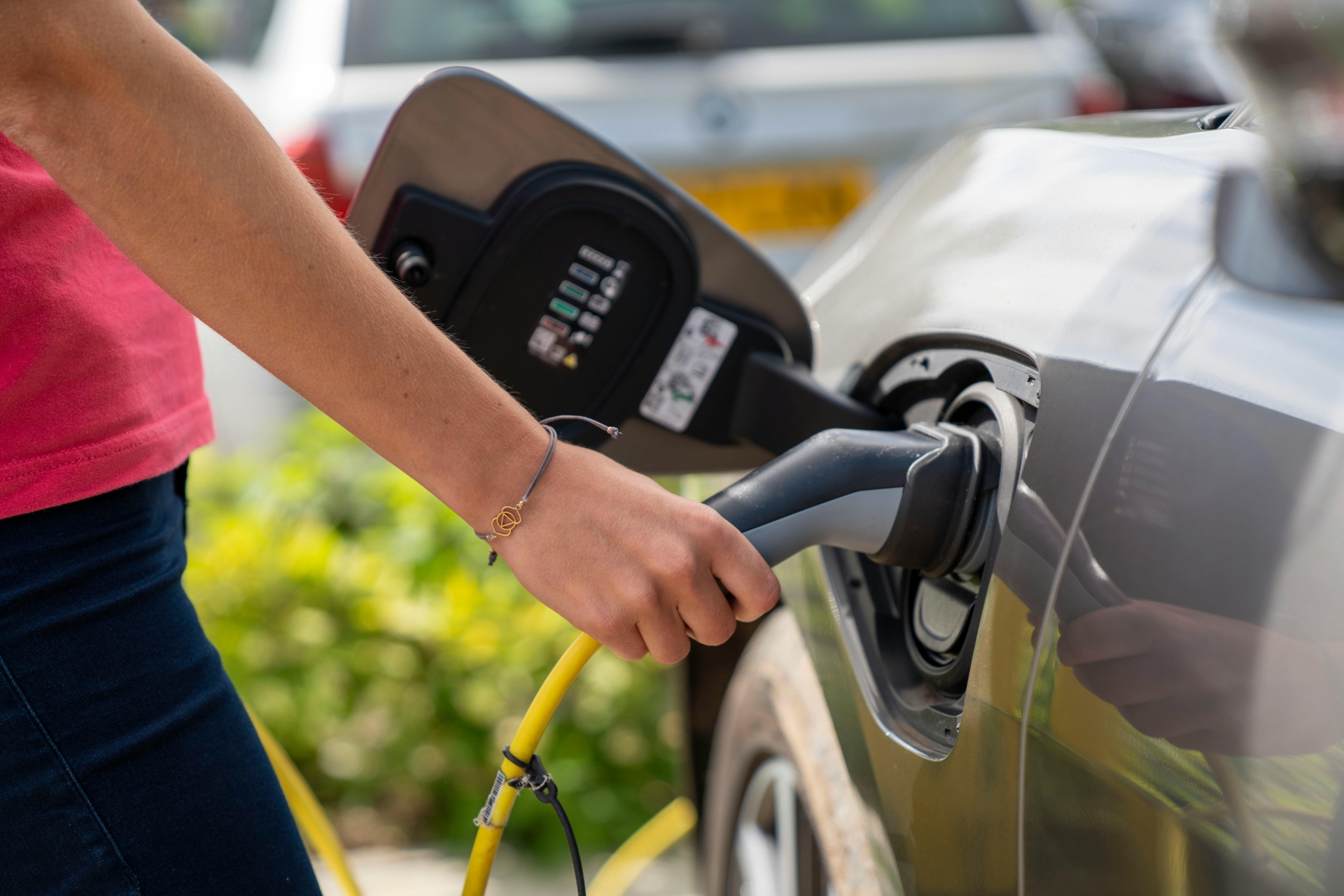
According to publicly available data, the Volkswagen Group is hit the hardest with an approximate write-down of some €25 to €30 billion, followed by the Stellantis Group (Peugeot, Fiat, Opel, Jeep, DS) at some €10 to €12 billion. BMW are next at some €5 to €7 billion, with others like Mercedes at an estimated €6 to €8 billion, Renault-Nissan at €5 to €6 billion. MORE BELOW PHOTO.
Other smaller car manufacturers making up the balance of some €3-€5 billion.
A staggering hit.
So what are the car manufacturers doing?
First of all, they all intend to eventually electrify their fleets, but many have now extended production of the internal combustion engines (ICE) as they have realised that this is where the market will be for longer than was anticipated.
Many will try to keep within the emission regulations by producing hybrid versions of the petrol power plants.
Others are focusing on the luxury and performance car segment, whose buyers are the slowest to move to EVs, but where profits are greatest.
Take Porsche, for example. They have had to completely rethink their manufacturing plans as the electric Taycan is just not selling, but the petrol-engined 911 is selling very well. It’s relatively low volume but high profit.
READ NEXT: School buses and trucks unable to pass on narrow Laois road
Their petrol Macan is outselling its EV version. It is rumoured that they are dropping plans for an EV version of the Boxster and Cayman and reverting to mild hybrid petrol engines instead. This type of reversal is seen throughout the industry.
So where does that leave the potential car buyer?
My advice is to do your research first. You really need to be sure an EV meets your needs in all the areas discussed above. EVs have their place, but this hysterical rush to force everyone into one has proven to be very misguided.
Second, don’t panic at those who tell you petrol and diesel won’t be available in a few years...rubbish! There are many modes of transport that I am sure you know of that require one or the other. Also, renewable fuels are coming, and ICE engines can quite easily run on these fuels without conversion.
READ NEXT: Ribbon cut on big upgrade of main Laois Kilkenny road at busy Tírlán creamery
My final piece of advice would be not to rush into a new EV model if home charging or resale value is uncertain. Equally, don’t cling on to an ICE indefinitely and consider a petrol hybrid, preferably the self-charging type as a middle ground.
Remember the proverb
“Never be the first to take on the new or the last to leave off the old” – allegedly, an old Chinese proverb which really does make perfect sense in this context.
In the meantime, happy motoring and keep an eye on www.whichnewcar.ie for the latest in new car news and road tests.
Portlaoise District Court
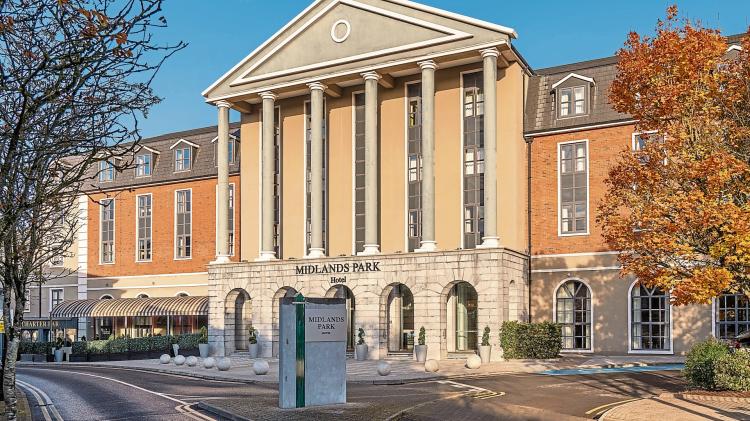
The expo will be held in Midlands Park Hotel, Portlaoise

The Laois badminton that were crowned Grade 4 Leinster Badminton champions in March

Laois captain David Dooley solos away from Carlow's Fiachra Fitzpatrick in last year's Joe McDonagh Cup game

Subscribe or register today to discover more from DonegalLive.ie
Buy the e-paper of the Donegal Democrat, Donegal People's Press, Donegal Post and Inish Times here for instant access to Donegal's premier news titles.
Keep up with the latest news from Donegal with our daily newsletter featuring the most important stories of the day delivered to your inbox every evening at 5pm.

This publication supports the work of the Press Council of Ireland and Office of the Press Ombudsman, and our staff operate within the Code of Practice of the Press Council. You can obtain a copy of the Code, or contact the Council, at www.presscouncil.ie, Lo-call 1800 208 080 or email: info@presscouncil.ie.