Denis O’Donovan of Ballyryan, Donohill, Co Tipperary
Search


12 Mar 2026

Please allow ads as they help fund our trusted local news content.
Kindly add us to your ad blocker whitelist.
If you want further access to Ireland's best local journalism, consider contributing and/or subscribing to our free daily Newsletter .
Support our mission and join our community now.
To continue reading this article, you can subscribe for as little as €0.50 per week which will also give you access to all of our premium content and archived articles!
Alternatively, you can pay €0.50 per article, capped at €1 per day.
Thank you for supporting Ireland's best local journalism!

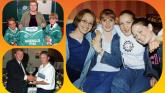
Left: Aoife Hoey was the flag bearer for the Irish team for the 2010 Games in Vancouver. Top Right: Aoife was the bobsled pilot for Ireland. Bottom Right: Sisters Aoife and Siobhain Hoey

Believe it or not, there was once a set of sisters from Portarlington who went to the Winter Olympics to represent Team Ireland at the 2010 Winter Olympic Games in Vancouver.
Aoife and Siobhain Hoey came to bobsleigh from a formidable background in track and field. Siobhain was a ten-time national senior triple jump champion and record holder both indoor and outdoor, as well as an Irish Universities champion in a variety of events. Aoife also won a national senior triple jump title and, like her sister, collected numerous juvenile national medals in events including the long jump, hurdles and shot put.
Siobhain was the first Irish woman to ever drive a bobsleigh in Lillehammer in 2000. A decade later, Aoife would carry the Irish flag at the Olympic opening ceremony. The sisters never got to race together at an Olympic Games after Siobhain sustained a career-ending injury in qualification for the Torino Games in 2006, but she returned in 2010 in a different role, becoming the first Irish woman to serve as Chef de Mission at either a Summer or Winter Games. Aoife competed in Vancouver as pilot of the Irish women’s bobsleigh with Claire Bergin as brake athlete.
16 years on, Aoife says her perspective on the Vancouver Games in 2010 has changed.
"My thoughts on it now are a little bit different, I suppose, than they were then, because now you're looking at it from a different perspective, and you know now how big an achievement it was. Then it was such a high-pressure situation with a lot of stress and a lot of responsibility, and everybody in Ireland at the time was watching us because we were the first, and the first for women, the first for a lot of things. It came with a lot of responsibility, but we knew that we had done something amazing, and we had to continue to show that we could do amazing things, and by being there, we not only had to be there, but we also had to be there and compete hard and to do well for ourselves and for everybody," Aoife said.
One of the most memorable moments of the Games was the opening ceremony, where Aoife carried the Irish flag with her sister walking behind as Chef de Mission. Recently, Aoife found herself reliving that moment with her young son.
"Even now, watching the opening ceremony, I have a seven-year-old son, and I thought this is a good time now to try and explain it even further, what it is. We sat down and we watched it, and we showed him the flag bearers coming in and the teams and the athletes, and then going back and showing him my Olympic opening ceremony and saying, look, that's me, you know, and I did this, and trying to show the emphasis and the importance of it and the pride for your country that all those athletes have. It was very important on the night, and it was a very magical experience to go in, even with a small team, but to go in with Siobhain being there in a different capacity. I know she would have loved to have been there as an athlete, but to be there as Chef de Mission had its own merit and reward, and it took us a long time to get there, but we did it," Aoife said. READ MORE BELOW PICTURE.
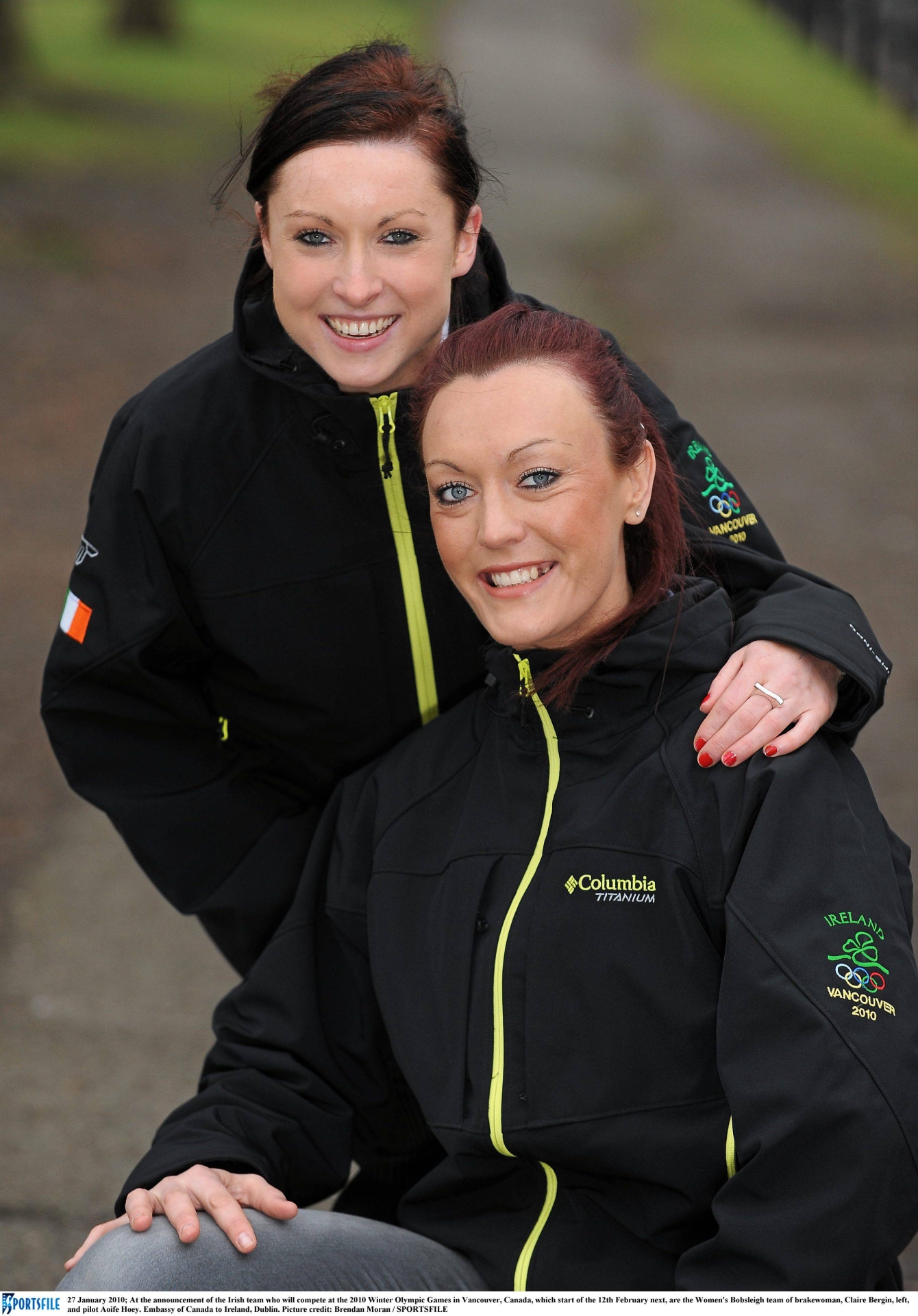
The Women's Bobsleigh team of brakewoman, Claire Bergin, left, and pilot Aoife Hoey for the 2010 Vancouver Games. Picture credit: Brendan Moran / SPORTSFILE
For both sisters, the move from athletics to bobsleigh was a natural progression. Aoife recalls how their first exposure came through dry-land training in Dublin and how quickly she realised the scale of the challenge involved in the sport.
"We had a dry-land bob in Santry Stadium. It's just bobsleigh on wheels, essentially, an old bobsleigh that was used in the Nagano Olympics, so that was perfect. Most athletes who come into bobsleigh come from speed sports; they're fast or explosive, so yeah, we had that element. From a brakeman's perspective, Siobhain being in the back, I also started as a brakeman before I learned to drive. You push off hard, really hard, and you jump in, and then your job is done, essentially, until you have to pull the brakes at the end, but you can't go too wrong with that.
"It's such a huge element of bobsleigh that people don't realise that you have to drive. You have to drive the sled from the top of the track down for, whatever, 53 seconds to a minute, depending on the length of the track, at over 140 kilometres an hour, through pressures of G-force of 3 to 5 Gs. To drive it, that is what bobsleigh is, that is a terribly technical and difficult thing to do. Especially on some of the tracks, like the Olympic track in Vancouver, we only had a couple of days of training before the Olympic Games. We had not been on it the previous season, and the Canadian girls won that Olympics, but they may have had hundreds of runs down the track. Bobsleigh is a very, very difficult sport, because of how technical it is, and also how much team support you need. You need physios, you need doctors, you need good bobsleighers, and you need equipment. So coming from track and field, where you put on your spikes, and you go, and you run, obviously, there are expenses to those sports too, but in comparison to bobsleigh, we had no idea what was needed to get a team to an Olympic," Aoife added.
Siobhain, reflecting on the same transition, emphasised how common it is for sliding nations to train far from snow or ice.
"For a lot of countries involved in winter sports or sliding sports, like bobsleigh, skeleton and luge in particular, an awful lot of those countries don't have the facilities. I started as a track and field athlete. I had my first international competition as an athlete at the age of 12. Aoife was an international athlete as well, so you're built for speed and power. It suits bobsledding.
The men's team, who competed in Albertville and Nagano before the women's event was introduced, trained beside us and did dryland training beside us at the Santry Stadium, so for me, the transition to winter sport was natural. All teams do dryland training for the majority of the year, and then once they ice, because all tracks except for St. Moritz are artificial, so once they're refrigerated from October through to maybe the end of March, you have to be ready to travel and train internationally for that part of your training.
"If you think of Canada, after the snow is gone and the ice tracks are thawed out, they can do the very same training. They do the very same training that athletes in Ireland could do, or athletes in Britain can do.
You have dryland training and dryland start sleds that you're able to push in the off-season. Non-snow nations can be very successful. If you think of the Dutch, they were very strong competitors of ours when we were sliding; they're still very strong in the sport now. They don't even have hills. If you think of Holland and Lolland, we have an advantage over them. It was a natural progression for me, and for Aoife too, because it's almost part of family tradition," Siobhain said. READ MORE BELOW PICTURE.
-1771417988695.jpg)
Siobhan Hoey was Ireland's Chef de Mission in 2010.
Bobsleigh, however, also brought setbacks. Siobhain’s career ended after a severe injury during Olympic qualification in 2006.
"It was horrendous. It happened in the ice house or the start house in Calgary, where you can do indoor push training for your sled. You're pushing on ice, and the sled goes down a hill and up a start slope, it's about 60 metres in length. We were pulling it back up the slope, and the runners, which are the blades underneath the sled, severed my heel right through to my Achilles tendon. It was awful, the cut was that deep, and it was so bad that it didn't bleed. My whole body was shocked. You're talking about a long recovery. I had to do two races with my foot squashed into a spike. The American physios helped me because we had no alternative athlete to use.
"Truth be told, it wiped out our season for 2006 because two race results were not where we wanted them to be. It was dream-shattering as well as destroying and wiping out my dream; it also wiped out Aoife’s, even though we just missed the Games by a point for 2006 for the Torino Games. It was horrific, so it meant that after that season, I didn't have any option really but to retire because it still is problematic now as an injury, especially when the weather gets cold. Sport can be very cruel. You never get hurt until you're at the peak of your fitness," Siobhain said. READ MORE BELOW PICTURE.
-1771418082552.JPG)
The Hoey sisters from Portarlington, Siobhain (left) and Aoife
Aoife remembers that period as one of the most difficult of their sporting lives.
"I'm not sure if we had a lot of time to reflect on it, but we knew we had another Olympic cycle to do. It was really hard to find the motivation to start again, and then knowing that Siobhain wouldn't be there to do it, in the same capacity as an athlete. It was a hard time, and it takes a lot to build an Olympic program, and it takes a lot of support, and a lot of dedication. We had a lot of support, and we were very lucky from family and friends, and people who did fundraisers. The Olympic Council came in and gave some help and support by buying a bobsleigh at that time, which is not a cheap thing to purchase. We wouldn't have done what we did without having everyone around us. I guess we were very successful in athletics, and that drive and determination were there from a very, very young age. I'm sure we had many obstacles then as well, in our own athletic sport, from injuries and things. I guess it was trained into us, it became programmed into us, not to give up on something, and to continue, and luckily, we did.
"Other than after Vancouver having further problems with health and injuries, I would like to think that maybe I would have been able to continue to drive up until even now. There are girls sliding now, 22 seasons later, who started to drive when I did, and they're medalling, and they're top in the world still, and they're over 40. Obviously, 40, it's probably as far as you can go in most sports. We're lucky we kept going, because if we didn't, I never would have achieved something that was there for the taking, and everything would be very different now," Aoife said.
Despite not competing in 2010, Siobhain channelled her disappointment into helping the team reach the Games.
"Yes, and that's why after retirement, I was 100% committed to getting a women's team qualified. It would have been amazing to compete in the Games with her, but I did compete in European Championships and World Championships with her. So I was very blessed that we did, considering the age gap, I never thought it would be a possibility, but yes, it would have been nice to walk into an Olympic arena as fellow competitors and sisters. We did have many races as sisters sled, to use headlines that had been used before. You don't have control over these things, you just manage it. I think at the time I didn't mourn it because it would have been too heartbreaking. You just deal with it and you move on because you can dwell or you can lose too much of your time of your life thinking about those things. So did I mourn it? Probably not until more recent times," Siobhain said. READ MORE BELOW PICTURE.
-1771418140656.jpg)
In Vancouver, her responsibilities as Chef de Mission were extensive.
"It's a very broad role, so you have logistics. You're looking after the transport of all of the athletes, and in our situation, we had six athletes there. We had skiers, and we had a bobsleigh team, and we had a skeleton team. We had sleds, and they had to be transported to Canada. During the Games themselves, you're supporting the athletes in their final preparation for competition, supporting the athletes during competition itself, and liaising with the media. There'll be daily meetings for the chef de mission. You’d be making sure that there's physio, that there's doctors, that parents and others can access the village, looking after security. It even said in the handbook to celebrate the birthdays of competing athletes. It was actually huge; it was full on. When I was there, it was a voluntary position, and now, in these current Games, it's not a voluntary position; a member of the OCI has been appointed to the role. It was a role given to a voluntary sports administrator who had dedicated their life, basically, to sports. There was a huge physical side to it at the Vancouver Games, because we had a very small support team. The women's bobsleigh is an interesting thing, because obviously, I was a competitor myself. The sled itself is over 150, 160 kilos. Except for the four, less than four minutes that it is on ice during competition, that sled has to be pulled, dragged and carried everywhere, so you had that whole physical aspect of it. I suppose you're a jack of all trades. You have to be everything to every athlete on the team that is there, physio, coaches, and just make sure everything goes smoothly," Siobhain said.
Walking into the stadium behind her sister remains one of her most vivid memories.
"It was immense because I started sliding in 2000, so it took 10 years to get to that point. You're ready to go into the arena, the opening ceremony, even with a small team, you're waiting hours to go in. In comparison to the Milano Cortina opening ceremony, I actually kind of felt a little bit disappointed that the athletes were all in different venues. In Vancouver, when you're ready to go into the arena, the performance is already on for maybe an hour, an hour and a half before your team gets to parade in. It's like a gladiator or something, ready to go into the Coliseum because you're coming up from underground, you can hear all the footfall, you can hear all the excitement, the entertainment, and then you're nervous and excited.
"My team and the athletes that I was particularly involved with, Aoife (Hoey), Claire (Bergin) and Pat (Shannon), had a bet on to see who would cry first, how long I would last before I even went into the arena. The immense pride, the adrenaline, it was a once-in-a-lifetime feeling, unless you have the opportunity to go more than once. It's indescribable, I think you're excited, but you're fearful. It's every emotion that you possibly can have, and then you walk into the arena, and it erupts. To hear the shouting and the roaring and the cheering, it was unbelievable," Siobhain said. READ MORE BELOW PICTURE.
-1771418221096.jpg)
Aoife Hoey was the Irish flag bearer for the 2010 Vancouver Winter Olympic Games
Today, Aoife still follows the sport, albeit from a different perspective.
"I took a couple of years where I didn't watch it so much. I was more focused on moving away from it and taking a mental break from it. I moved on with a different chapter of my life, moving to Sweden and things like that, and sometimes you have to let things go and find the love for it again. Trying to redefine who you are and finding a new identity and things, it's quite complicated for an athlete to give up a career and a network and people and who you are to try to become something else, which you don't know what that is. I've started to reinvest again and look at winter sports. I watch and follow the girls that I would have slid with, although there's a whole crew of new women bobsleigh athletes now, but there are still a few girls that I would have been on the circuit with, and I'll support them. I also have a seven-year-old son, Hamilton, and he's just started ice hockey. So now my husband, Christian, and I are starting to look at supporting him and looking out for his interests, and I don't know much about ice hockey, but we're learning as we go," Aoife said. READ MORE BELOW PICTURE.
-1771418279601.jpg)
Yet Aoife also reflects with some frustration that Ireland has not built on the momentum of that Olympic appearance.
"People say you come from track and field, and it's a good suitability for bobsleigh, and it is, but we as a country just haven't excelled in winter sports. Since we left bobsleigh in Ireland, there hasn't been another women's team. There's no program, there's no girls being recruited. It's kind of important to say to everybody that just because it doesn't seem possible doesn't mean that it's not possible. We've been there, and we've been there in 2010; there's no reason why, other than hard work and support, that we couldn't have more athletes out at the Winter Olympics," Aoife concluded.
For the Hoey sisters, Vancouver was more than an Olympic appearance. It was the culmination of years of persistence, setbacks, and shared ambition, a journey that began in Portarlington and ended on the world’s biggest winter stage, together, even if not in the same sled.

Subscribe or register today to discover more from DonegalLive.ie
Buy the e-paper of the Donegal Democrat, Donegal People's Press, Donegal Post and Inish Times here for instant access to Donegal's premier news titles.
Keep up with the latest news from Donegal with our daily newsletter featuring the most important stories of the day delivered to your inbox every evening at 5pm.

This publication supports the work of the Press Council of Ireland and Office of the Press Ombudsman, and our staff operate within the Code of Practice of the Press Council. You can obtain a copy of the Code, or contact the Council, at www.presscouncil.ie, Lo-call 1800 208 080 or email: info@presscouncil.ie.