

State appeals 'unduly lenient' sentence of man who raped his younger sisters in Laois

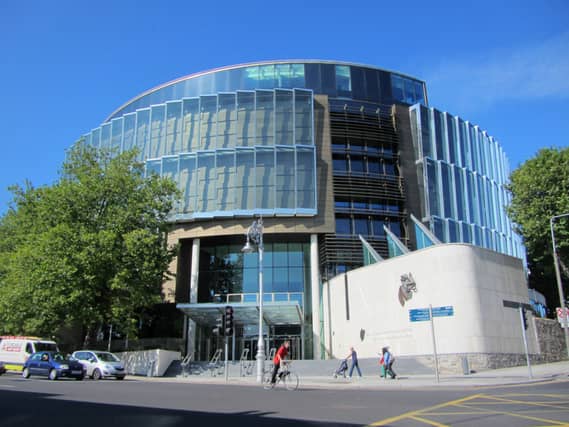

The four-and-a-half year jail sentence handed down to man who continually abused his two younger sisters - which included raping one sister "eight to ten times" - was too lenient and should be overturned, the State has argued at the Court of Appeal.
It is the State's case that there were two victims in the case but only one punishment due to the concurrent structure of the sentences imposed.
When jailing Christopher Rafter (49) in June of last year at the Central Criminal Court, Mr Justice Paul McDermott said it was “outrageous” that family members criticised the sisters and ostracised them for their courage in revealing the abuse, which he said had "destroyed" their childhood.
“They were little children in their own home,” the judge said, adding that Rafter bears the guilt and the responsibility for his abusive behaviour. “It should not even have to be stated,” said Mr Justice McDermott.
In their victim impact statements, sisters Dolores Prendergast and Linda Rafter had said they hoped that their coming out about the abuse would help others “carrying a similar cross”.
The women waived their anonymity in order for Rafter to be named.
Rafter, of The Hermitage, Portlaoise, had pleaded guilty at the Central Criminal Court to the rape and sexual assault of the two sisters at the family home on dates between 1989 and 1993. Rafter had no previous convictions at the time of his sentencing.
Ms Rafter and Ms Prendergast were both younger sisters of Rafter, and were aged between six and 10 years and nine and 11 years old at the time of the abuse. Rafter was aged 14 at the start of his offending and 19 when it ended.
At the Court of Appeal today, Fiona Murphy SC for the State, said Rafter had been given "too much credit" in mitigation when he was jailed for the "systematic abuse" of the two sisters and that the resulting sentence was "too low".
Ms Murphy said the maximum penalty for sexual assault was 10 years' imprisonment but that Rafter had only been sentenced to two years' imprisonment for the 10 indecent assaults.
Ms Murphy said a "low" headline sentence of nine years' imprisonment had been identified by Mr Justice McDermott for the rape of Linda Rafter but that mitigating factors reduced this to six years before the judge suspended 18 months of that sentence.
The barrister said the judge identified seven years as a headline sentence for the rape of Delores Prendergast but reduced that to four-and-a-half years after mitigation.
All sentences were to run concurrently, said Ms Murphy.
Ms Murphy said the abuse of Delores would happen late at night in the family home and initially involved the fondling of her private parts when he pulled down her underwear.
Ms Murphy said Delores would freeze and felt pain while she tried to pretend she was asleep.
Ms Murphy said digital penetration occurred on "a weekly basis or more often" and that there had been one incident of rape regarding her on Rafter's indictment.
The barrister said Linda Rafter had been raped "eight-to-ten" times by the accused and that the sexual assaults had become a "formality" for Rafter who would summon the girl upstairs.
Ms Murphy said Linda Rafter adopted the behaviour of "a robot" when dealing with the abuse and that both sisters had believed they were his only victim.
The two women spoke up about the abuse and Rafter was confronted at a family gathering where he admitted what he had done.
Ms Justice Isobel Kennedy asked if the offending was "continuous" and was told it was.
Counsel agreed with Mr Justice Patrick McCarthy her issue was that, because the sentences were concurrent, it amounted to a "single punishment".
Ms Murphy said the abuse was "a significant breach of trust" that continued over a five-year period and into Rafter's adult years. She added that Rafter's guilty plea could not be said to be an early plea.
The barrister said the cumulative nature of the offending had not been fully marked by the jail sentence.
Ms Murphy said too much "weight" had been given to the fact that the majority of the abuse took place when Rafter was a minor.
The barrister said the offending involved two victims who were younger siblings of Rafter who he should have been minding.
John D Fitzgerald SC, for Rafter, said that the Covid lockdown had delayed Rafter from entering his guilty plea as further psychiatric assessments had to be obtained after an initial report.
Mr Fitzgerald said the majority of offending occurred when Rafter was a minor and referenced similar sentences for the sexual assault and rape which meant that the four-and-a-half year jail term was "not radically out of line" with other cases.
Mr Fitzgerald said there had been an issue with Rafter's mental functioning and his ability to understand his offending and said his client had a "borderline intellectual disability" coupled with a "schizoid personality".
The barrister said his client would find it "more difficult" to serve his sentence compared to others and that he was a "very different" 18-year-old upon reaching his majority compared to most people.
Mr Justice McCarthy said the offending had been so fundamentally wrong that it was "almost irrelevant" that Rafter had cognitive difficulties. "It's such a basic concept that it should be understood that it is wrong," said the judge.
Mr Justice McCarthy said it is the State's case that there were two victims but that there was only one punishment for the offending because of the concurrent structure of the jail sentence.
Mr Fitzgerald said this did not amount to an error in principle when Rafter was being sentenced, that his client had indicated his remorse to the family and had no previous convictions.
Ms Justice Kennedy said the abuse had "a very severe and prolonged effect" on the two women.
Ms Justice McCarthy said the court would reserve its judgement in the case.
At the sentencing hearing, the two women outlined how, after they made their disclosures, family relationships had broken down and their names were “blackened and smeared” by family members who claimed they were “out for money” and that they should “get over it” as it was 30 years ago.
The sisters said they were not allowed to attend their father’s funeral and had to watch via the parish webcam. They watched as their brother was being “minded and fussed over.”
When passing sentence, Mr Justice McDermott paid tribute to the women for their courage in coming forward, adding that they "deserved nothing but praise" from their community.
“It is a difficult thing to do and a difficult path to take,” the judge said. “The personal price is a high one. It must not be hidden. People must have confidence to come forward and know when they do that they will be listened to,” he said.
Mr Justice McDermott said the women were subjected to further abuse by family members' “desperate attempts to prevent reporting of their abuse for the sake of the family name”.
“He inflicted awful damage on their growth and development as children,” he said. “That effect is long-lasting and continuous.”
Ms Prendergast outlined in her victim impact statement that she no longer wanted to call the accused man her brother and referred to him as “X".
She said she was a "survivor" with "no happy memories" of her childhood. "Inside those four walls I had no protection," she said.
“I was utterly alone in the face of the abuse,” she said, and went on to detail how the lack of protection had impacted her in terms of self-love, confidence and her ability to trust, carrying these effects into adult life.
Ms Prendergast said her mother had again rejected her truth when she made the disclosures for a second time in 2018 as an adult. She said her mother had tried to manipulate them with the shame of public knowledge for the family and her character was assassinated with “vicious lies.”
She said her brother began abusing her when she was just six years old and even her first Holy Communion was tarnished with the memory of rape. “I would love to save six-year-old me from his clutches,” she said.
She said her family had stood by, knowing the truth, thinking only about their own needs and how it affected them in society. She said her parents were cold and dismissive, only feeling sorry for her brother.
She said sexual abuse "should not be tolerated or accepted" and that she hoped her story would make a difference to someone "carrying a similar cross".