

Laois family homes’ rents surge as signs of slowdown appear

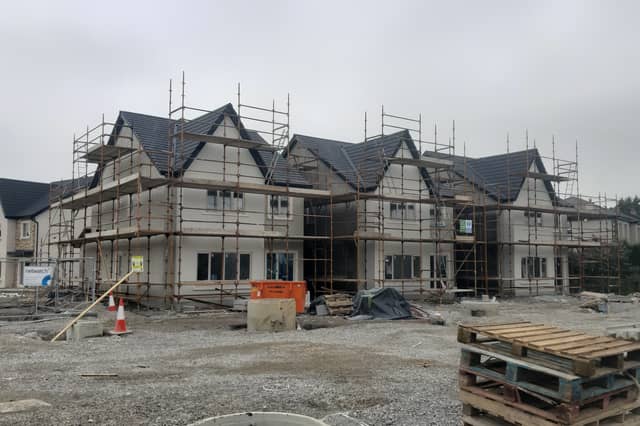

Average Laois rents are below the average for Leinster and rest of Ireland
Average Laois rents have risen by less than lower than the rate across Leinster and national but the cost of renting a family home in the county has jumped by nearly 20% , according to the latest report from Daft.ie.
Daft.ie Rental Price Report for the third quarter of 2026 reveals that market rents in Laois were on average 4.4% higher than a year previously. Daft.ie found that the typical open-market rent of a three-bedroom house in the county was €1,841.
There are also signs of a slowdown nationally, with rent inflation slowing to its smallest third-quarter rise since 2020, which Daft.ie attributes to the availability of rental homes recovering across the country.
The average monthly rents and annual percentage changes for Laois are as follow:
- One-bedroom apartment - €1,130 up 0.1%
- Two-bedroom apartment - €1,534 7 up 7.8%
- Two -bedroom house - €1,543 up 18.2%
- Three-bedroom house - €1,841 up 8.5%
- Four-bedroom house - €2,269 up 18.2%
- Doublebedroom in house (ensuite) - €713 up 4.8%
- Doublebedroom in house (no ensuite) €660 up 5.3%
- Doublebedroom in apartment €732 up 2.1%
- Single room in house €597 up 15.2%
The figures were published on Tuesday, November 17, when the Daft.ie website showed that there were 20 properties to rent in Laois.
The most expensive is a five-bedroom home on Kilteale Avenue, Dublin Road in Portlaoise. It costs €3,500 per month to rent. The least expensive is a one bed, one bathroom in for €1,000 in Rossmore, Killeshin.
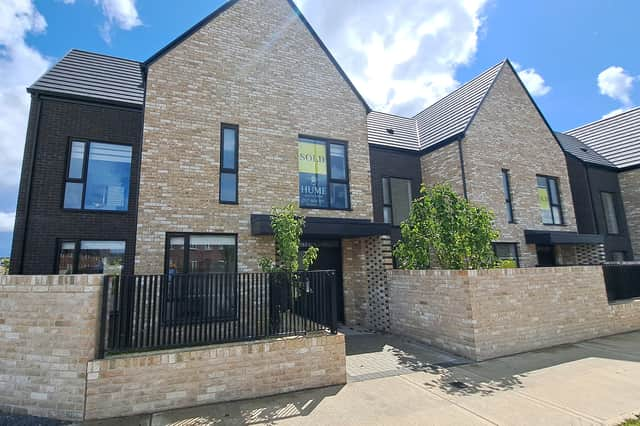
Nationally, the report finds that market rents rose by 0.9% between June and September, according to the latest Rental Report by Daft.ie. It said this is the smallest third-quarter increase since 2020 and below the average quarterly increase of 1.6% seen over the last decade. MORE BELOW PHOTO.
Nonetheless, annual inflation remains elevated, at 7.3%, down only slightly from June. The average monthly market rent nationwide is €2,239, with market rents 43% above their pre-Covid levels.
Daft.ie has found that inflation remains highest in the four major cities outside Dublin, where market rents were 9.3% higher than a year earlier. The report shows that market rents in the third quarter were 11.3% higher year-on-year in Cork city, 10.3% higher in Galway and 6.9% higher in Limerick. The rate in Waterford city, at 4.7%, was below that seen in Dublin, where market rents in September were 6.3% higher than a year before. Outside the cities, annual inflation was between 7.2% and 9.2% across Leinster, Munster and Connacht-Ulster.
There were almost 2,800 homes available to rent nationwide on November 1st, the highest November total since 2021 and an increase of 47% on the same date a year earlier. That comparison flatters the recovery, however, as availability a year ago was depressed in the run-up to the new rent rules: compared with two years ago, availability is up 16% nationally and is still 7% lower in Dublin. Across the country, availability remains well below pre-pandemic norms, when there were typically close to 4,400 homes to rent at any one time.
Ronan Lyons, Professor in Economics at Trinity College Dublin, commented on the outcome.
“The third quarter brings direct evidence on how landlords have used the new rent rules. Since 1 March, rents can be reset to market levels between tenancies. Homes available to rent just after that date were advertised at around 3% more than similar homes available just before, a gap that did not exist a year earlier, and more than twice as many lettings were timed to start on 1 or 2 March as in 2025. Some lettings were held back ahead of the change and then came to market at reset rents. That looks like a one-off catch-up rather than a lasting increase.
“At the same time, rents are rising roughly twice as fast as asking prices, so gross rental yields have increased in every region. On paper, that should be encouraging new rental supply. Yet the number of homes available to rent remains between a quarter and more than half below its pre-pandemic norm in every region. If better returns are not bringing forward new rental homes, the constraints lie elsewhere, in particular in the cost of building and in the uncertainty around what is allowed to be built where. Policy should focus on those, rather than on rents alone,” he said.
Daft.ie says the report aims to use this information to help all in the property market to make informed decisions about buying, selling and renting.