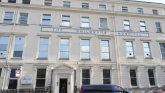
The shocking act happened near the Shannon River on the Condell Road I PICTURE: Google Maps
Search


11 Mar 2026

Please allow ads as they help fund our trusted local news content.
Kindly add us to your ad blocker whitelist.
If you want further access to Ireland's best local journalism, consider contributing and/or subscribing to our free daily Newsletter .
Support our mission and join our community now.
To continue reading this article, you can subscribe for as little as €0.50 per week which will also give you access to all of our premium content and archived articles!
Alternatively, you can pay €0.50 per article, capped at €1 per day.
Thank you for supporting Ireland's best local journalism!

Laois people can help the landmark redevelopment of the historic Portlaoise Convent building and church lands to win a national award in a public vote.
The social housing project in Portlaoise on the former school, convent and parish church property has been selected as a finalist for Building Project of the Year at the Irish Building and Design Awards.
This Laois County Council-supported development on Church Avenue will see 52 new public-supported homes created the heart of Portlaoise while conserving the protected Convent and the integrated tower, which is a National Monument.
The Sophia Housing project was delivered by Bretland Construction. Upwards of €27 million in public funds has been invested in the project, which also delivers a new public park, public outreach and youth services.
It is one of four "exemplary projects" selected as finalists for the Irish Building and Design Awards 'Building Project of the Year'. To vote for the project - tap this LINK.
The winner will be announced at a black-tie dinner on March 13 in Dublin.
The site, located on Church Avenue in the historic Old Fort Quarter, includes several heritage buildings that had been largely unused for over two decades. The central convent building dates back to 1824 and forms part of a wider complex that historically included the Sacred Heart National School and associated religious structures.
Over time, these buildings fell into disuse following the departure of the Presentation Sisters and the amalgamation of local schools in 2017.
To address both the dereliction of the site and the growing need for housing, a regeneration scheme was initiated by Sophia Housing Association in partnership with Laois County Council. The project aimed to transform the historic convent lands into a vibrant residential community while preserving the architectural and cultural significance of the existing structures.
The overall development includes a mixture of apartments and townhouses, along with communal and ancillary facilities. The project involves the adaptive reuse and conservation of protected structures, including the original convent and former school building, as well as the construction of new residential blocks across the site.
In addition to housing, the scheme incorporates public realm improvements such as landscaped green spaces, pedestrian connections, and a public park, enhancing accessibility and integration with the surrounding town centre.
READ NEXT: Well known Laois business hits the property market
This project forms part of a wider initiative to regenerate underutilised urban sites and encourage town-centre living. By combining heritage conservation with modern residential development, the Portlaoise Convent project aims to revitalise an important historic landmark while providing much-needed social housing for the local community.
Key Features & Challenges
The most significant challenge within the project was the restoration of Block A – the Old Convent Building. When Bretland Construction took possession of the site, the structure was in a severely deteriorated condition.
The round tower roof was in fragile position and was temporarily sealed, while a major leak above the main stairwell had caused extensive structural damage. The fourth and fifth stair flights were badly compromised, and flights one to three had completely disintegrated, with access provided only via a scaffold tower erected through the centre of the building.
Extensive structural interventions and additions were necessary, while protecting historically significant elements, including original terrazzo floors, tiled finishes, doors, and reclaimed flooring.
During façade restoration works, an historic arrow slit was uncovered within the tower’s gable wall — a remnant of the building’s original defensive function. In addition, a 200+ year-old well was discovered beneath the subfloor of a gable-end room. Both discoveries required immediate the involvement of an archaeologist and conservation architect.
One of the most technically demanding aspects of the project was the restoration of the original king post roof trusses in Block A. Years of weather ingress had caused significant deterioration. The trusses were repaired and reinforced using additional timber, steel plates, and threaded bolts to structurally tie the elements together. This process required substantial internal scaffolding from subfloor to attic level, making it both logistically complex and highly rewarding upon completion. MORE BELOW PHOTO.
-1773244186724.jpg)
Sustainability
Rather than demolition and rebuild, the project team focused on the retention, repair, and adaptive reuse of the existing historic structure.
Existing terrazzo floors, historic tiled finishes, original doors, and salvageable timber flooring were protected, restored, and reinstated wherever possible.
The restoration of the original king post trusses exemplified this approach. Despite significant weather damage due to long-term roof leaks, the trusses were repaired and reinforced using additional timber, steel plates, and threaded bolts rather than replaced. This retained the building’s historic character while avoiding the environmental cost of full structural replacement.
The project team included John O’Connell – Construction Director, Ross Connor – Senior Quantity Surveyor, Gary Connolly – Site Manager, Denis Tracey – Junior Project Manager, James Daly – Junior Quantity Surveyor, Amber McGuire – Senior Health & Safety Officer.

Subscribe or register today to discover more from DonegalLive.ie
Buy the e-paper of the Donegal Democrat, Donegal People's Press, Donegal Post and Inish Times here for instant access to Donegal's premier news titles.
Keep up with the latest news from Donegal with our daily newsletter featuring the most important stories of the day delivered to your inbox every evening at 5pm.

This publication supports the work of the Press Council of Ireland and Office of the Press Ombudsman, and our staff operate within the Code of Practice of the Press Council. You can obtain a copy of the Code, or contact the Council, at www.presscouncil.ie, Lo-call 1800 208 080 or email: info@presscouncil.ie.